A Pollinator Garden (By Accident?)

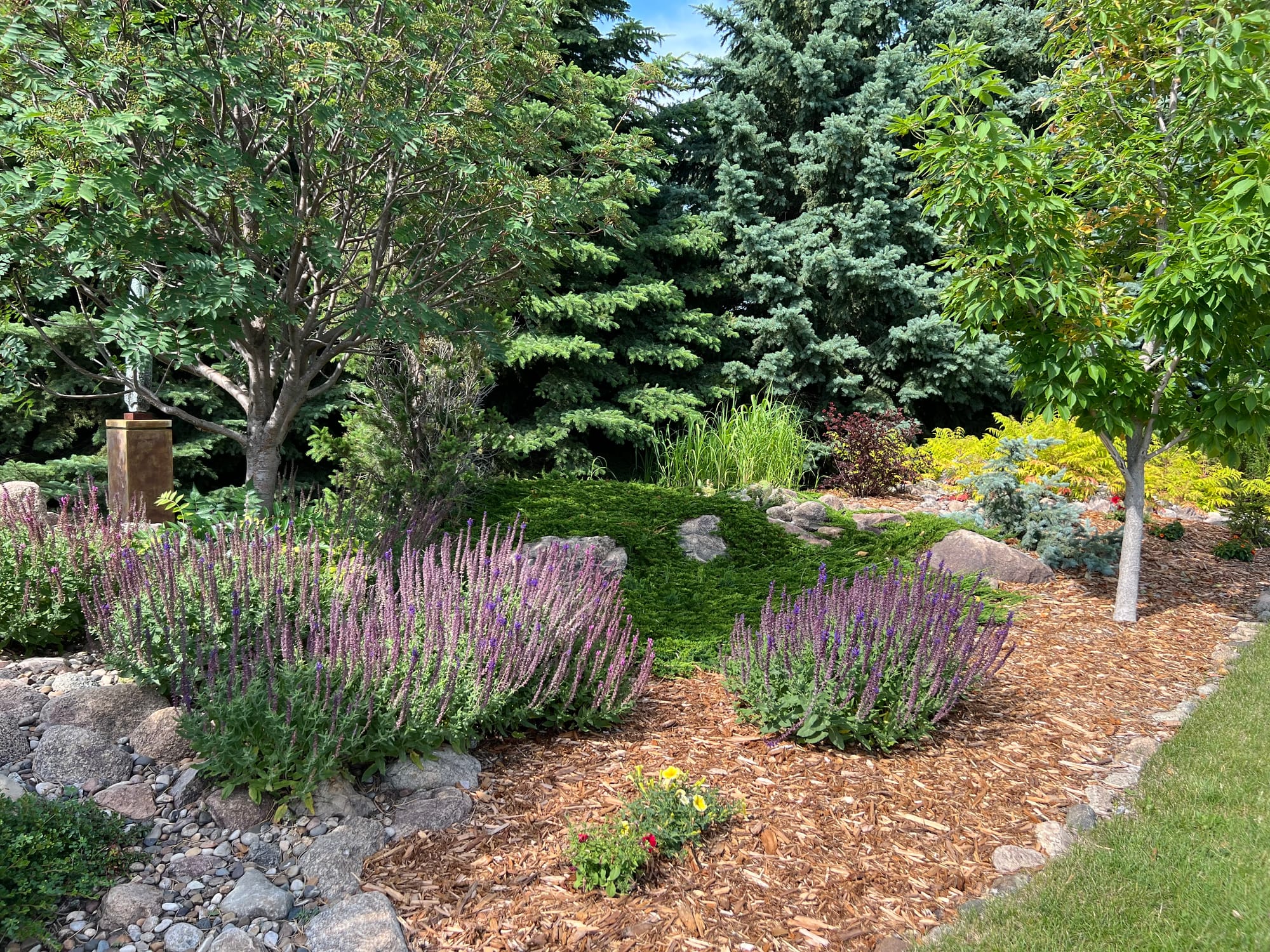
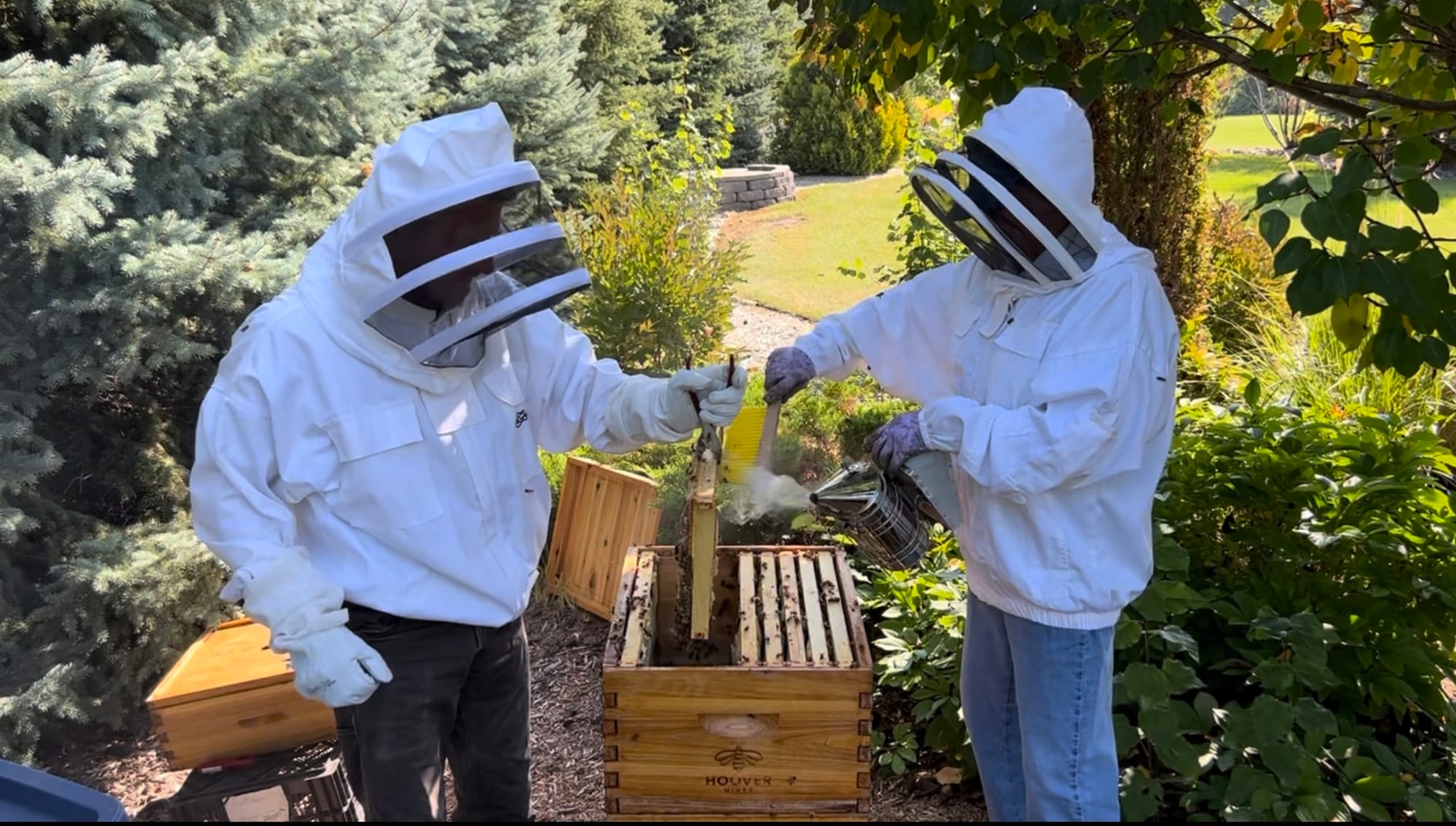
My wife and I started beekeeping a few years ago, and this hobby has really increased my interest in what plants bees and other insects are attracted to. And even though pollinator gardens have been a hot topic in recent years, I had never thought of our landscape as such.
But as it turns out, we’ve planted dozens of great plants that are attracting all types of insects that carry out the pollination process all of us rely on to survive. So I feel like we’re “part of the club” now, by accident. The more you “get into this,” the more fun it is, and I’m always curious now where the insects are going and where they’ll show up next.
For this blog, I’ll highlight many of our favorite plants growing in our gardens, with this video showing the bees and butterflies in action, and additional photos.
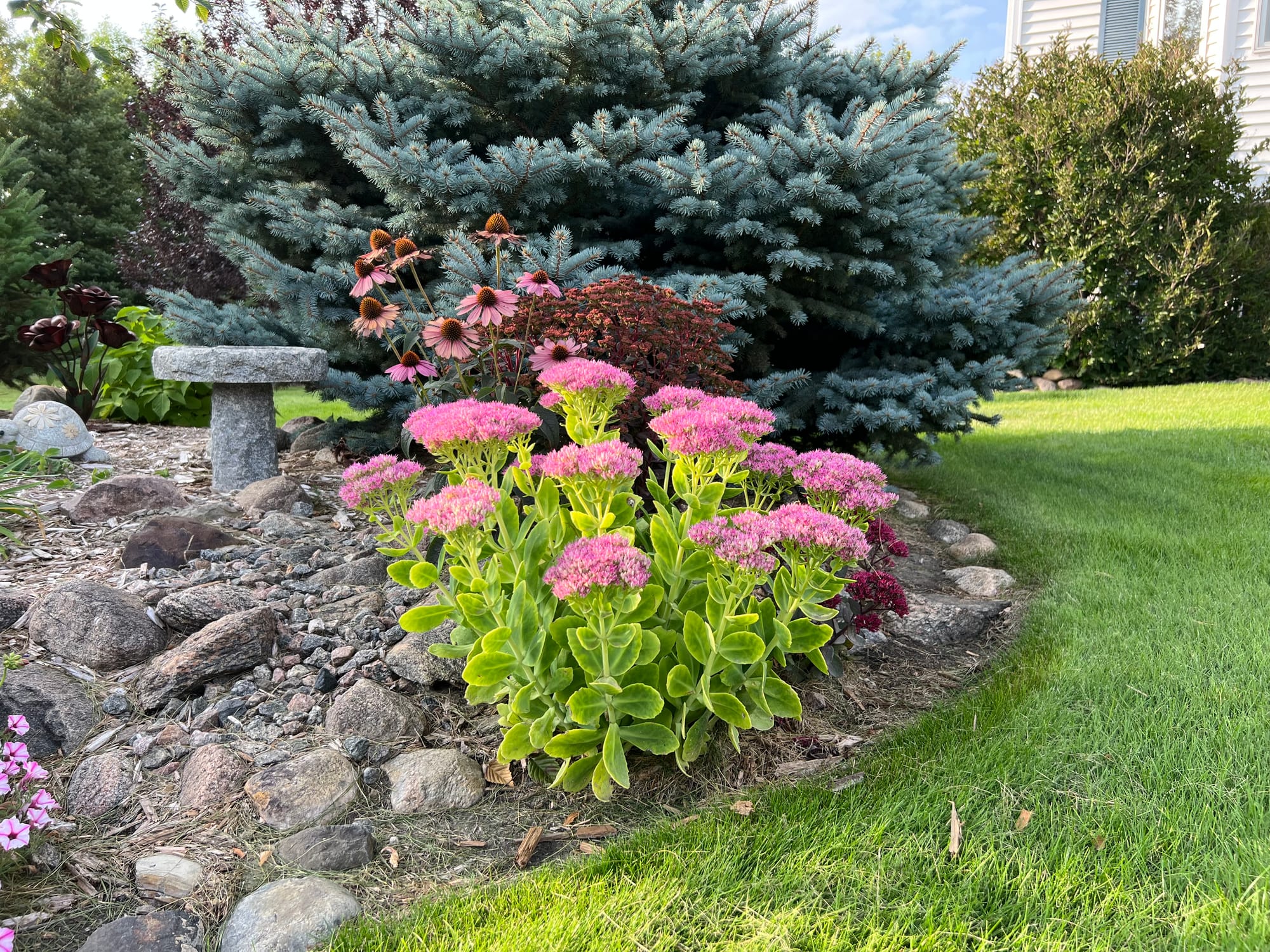
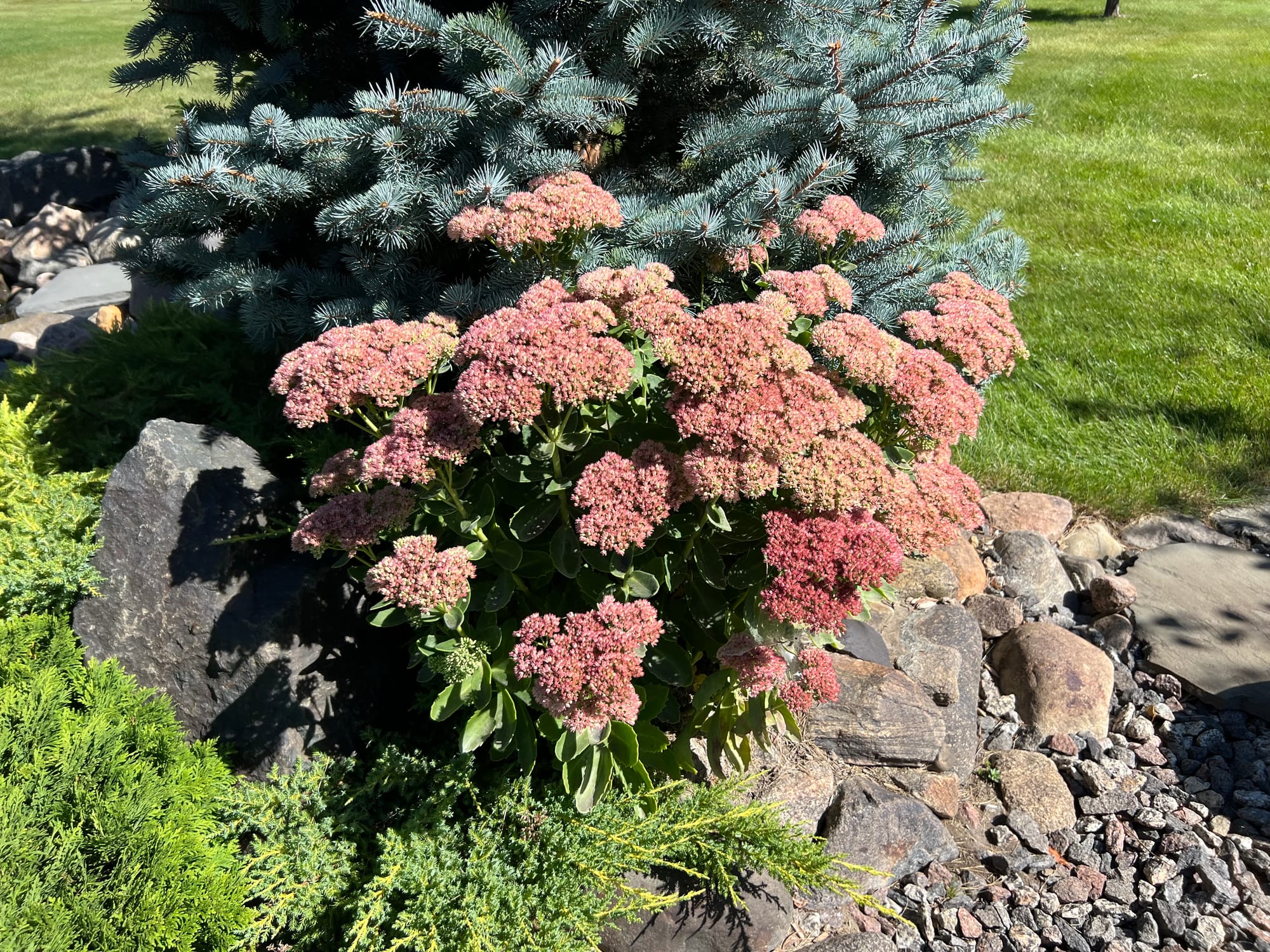
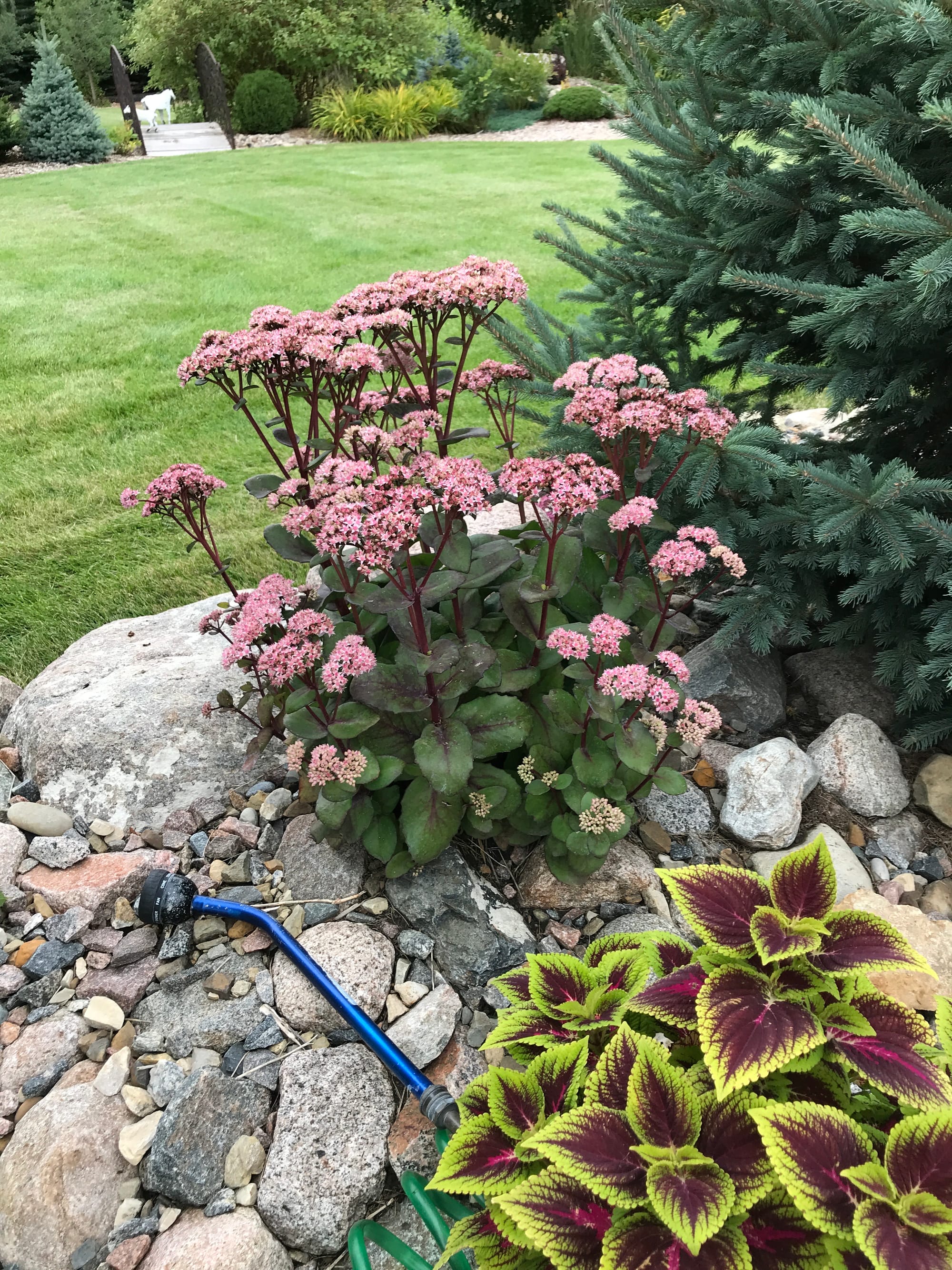
Sedum, also called Stonecrop, are a large group of plants with a wide variety of cultivars available in ground cover or upright forms. We have dozens of varieties planted, but I've noticed insects are more attracted to some than others. Three of the best, though, are Neon, Autumn Joy, and Matrona Sedum.
The Asters are one of the best perennials for late-season blooms. I don’t know the exact variety on this one pictured here, but it’s a bee magnet for us, all the way into October. Various Butterflies also love these flowers. This is a taller variety reaching 4-5 feet, but shorter varieties are also available in the trade.
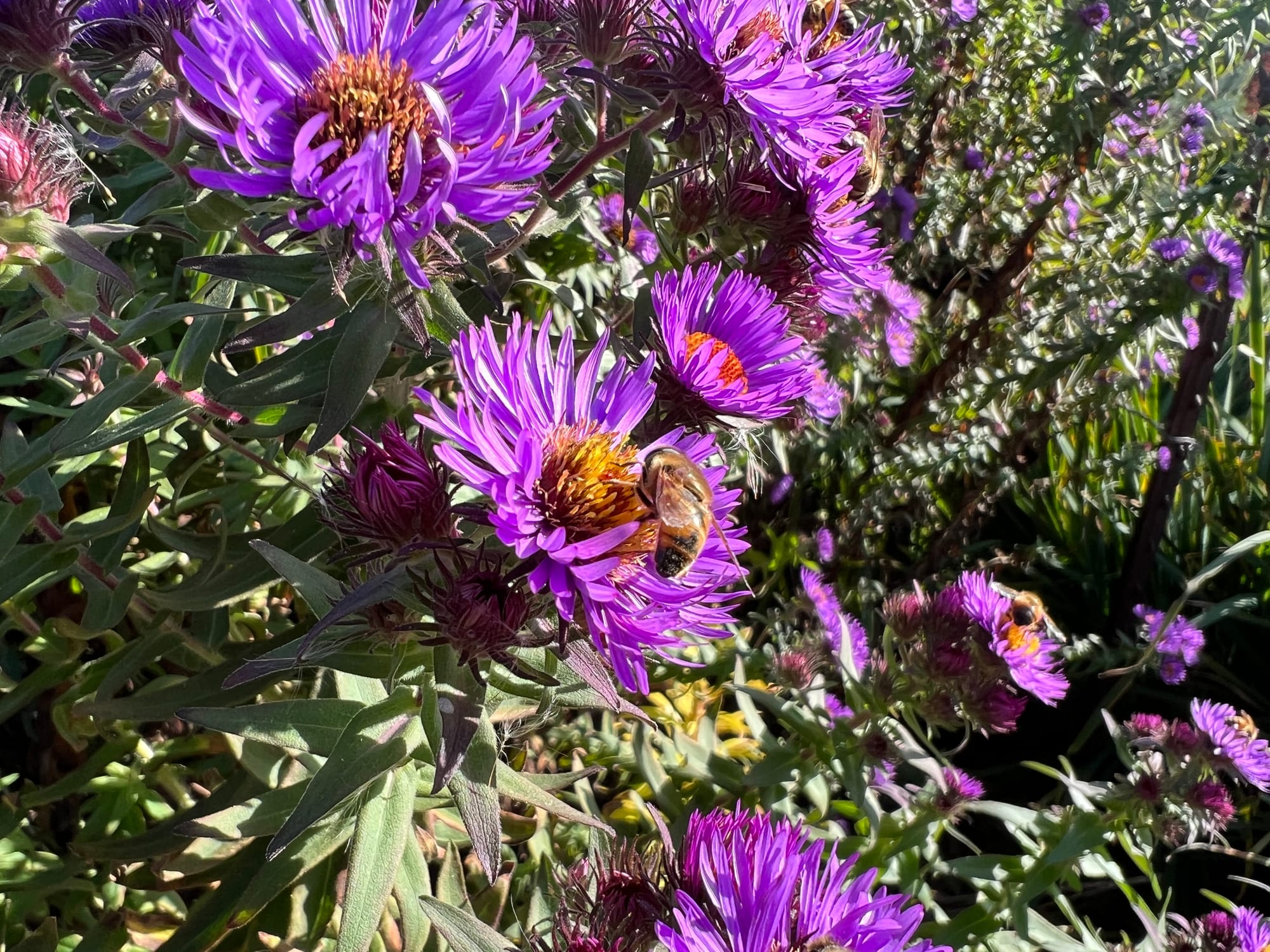
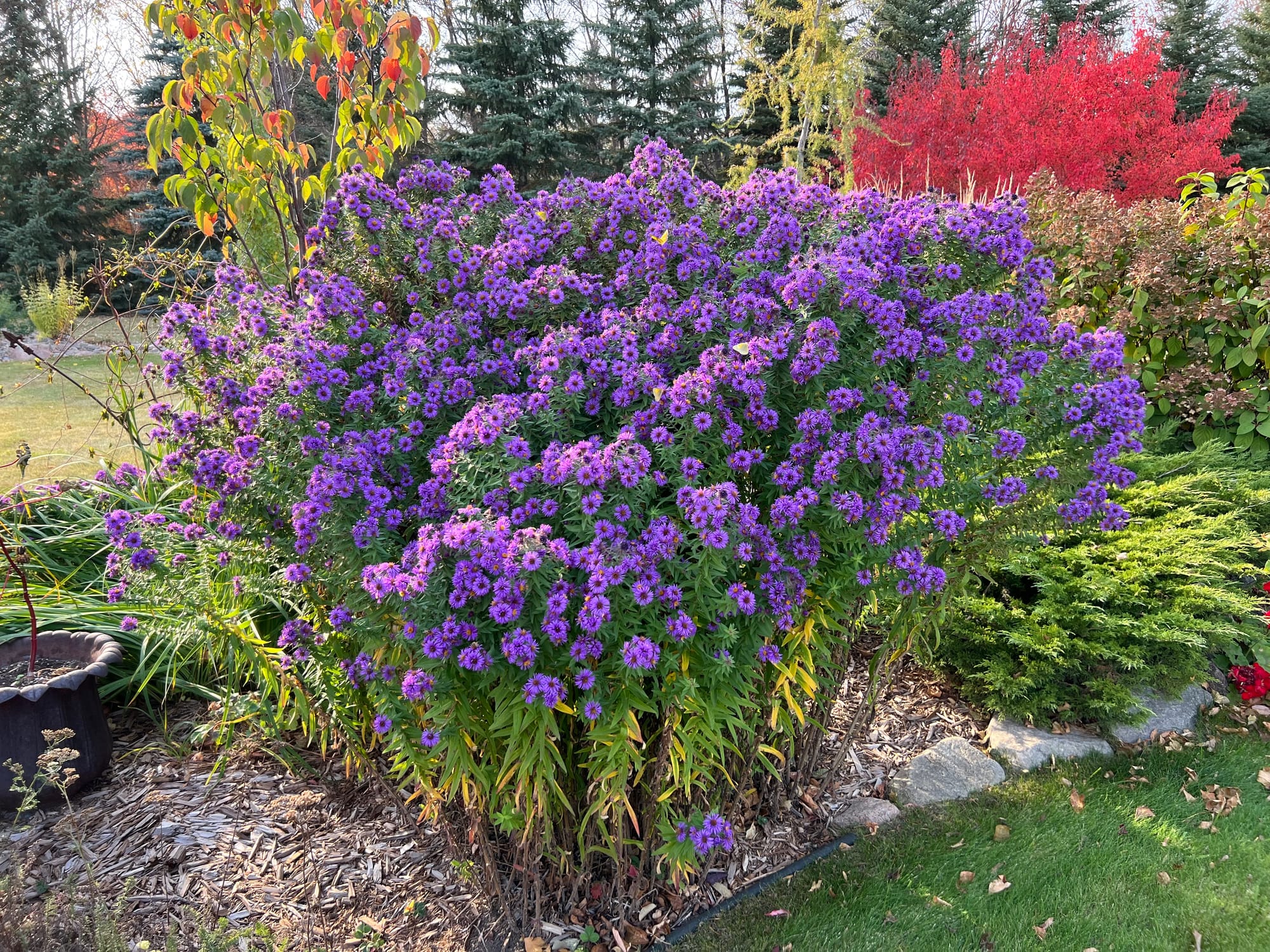
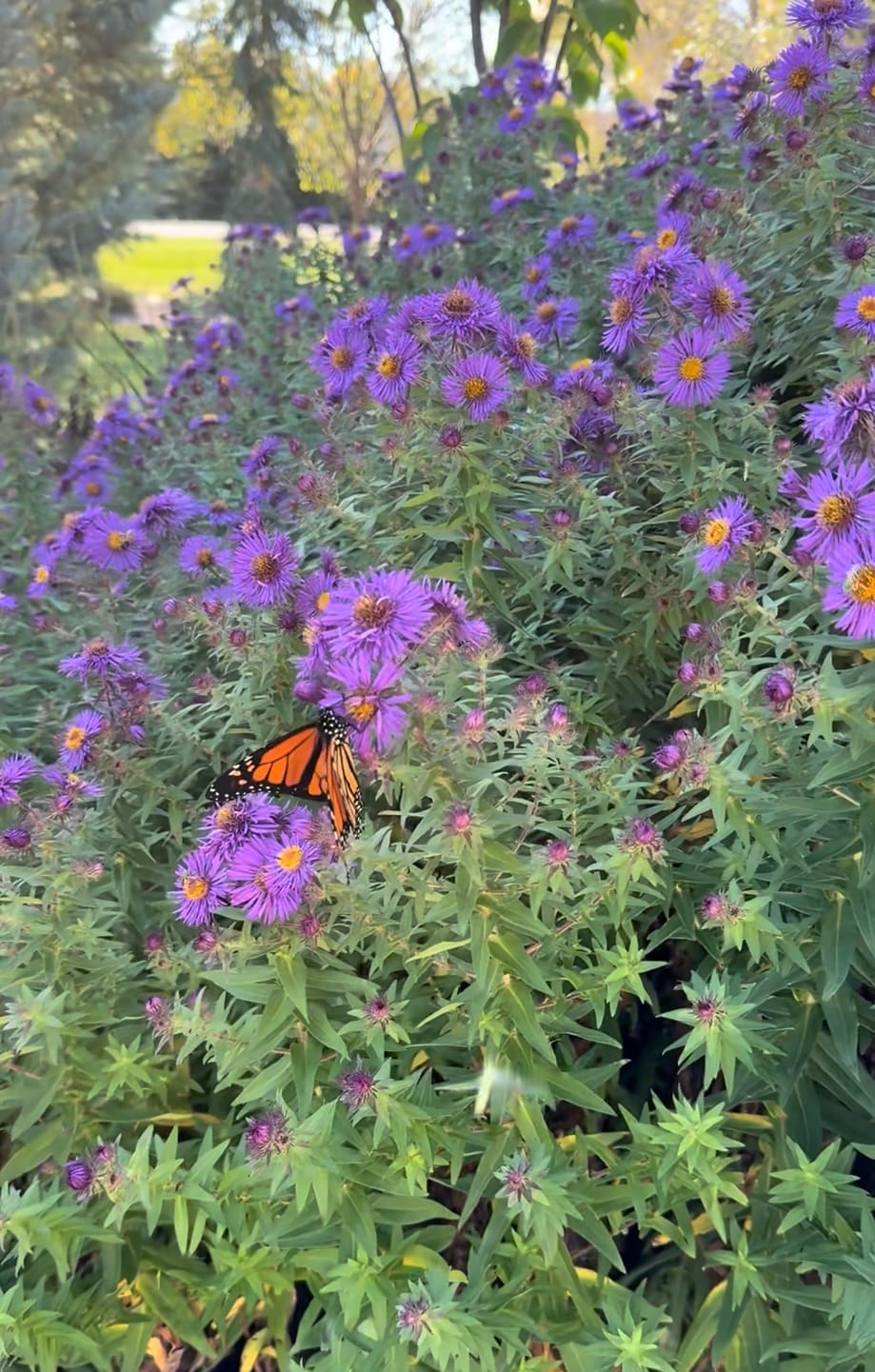
Aster
The next four perennials were purchased from Gertens, located in Inver Grove Heights, MN, where, on the wholesale side of their business, they offer some native perennials grown in small 3.5” plug trays (maybe there are some available on the retail side too). I suspect many of the perennials in their native line are grown from seeds, and I’m impressed at how many more insects these native flowering perennials are attracting.
I’ve noticed that many online companies that specialize in natives also offer these plants. The four (and I highly recommend them) are Iron Weed, Prairie Blazing Star, Meadow Blazing Star, and Culver’s Root.
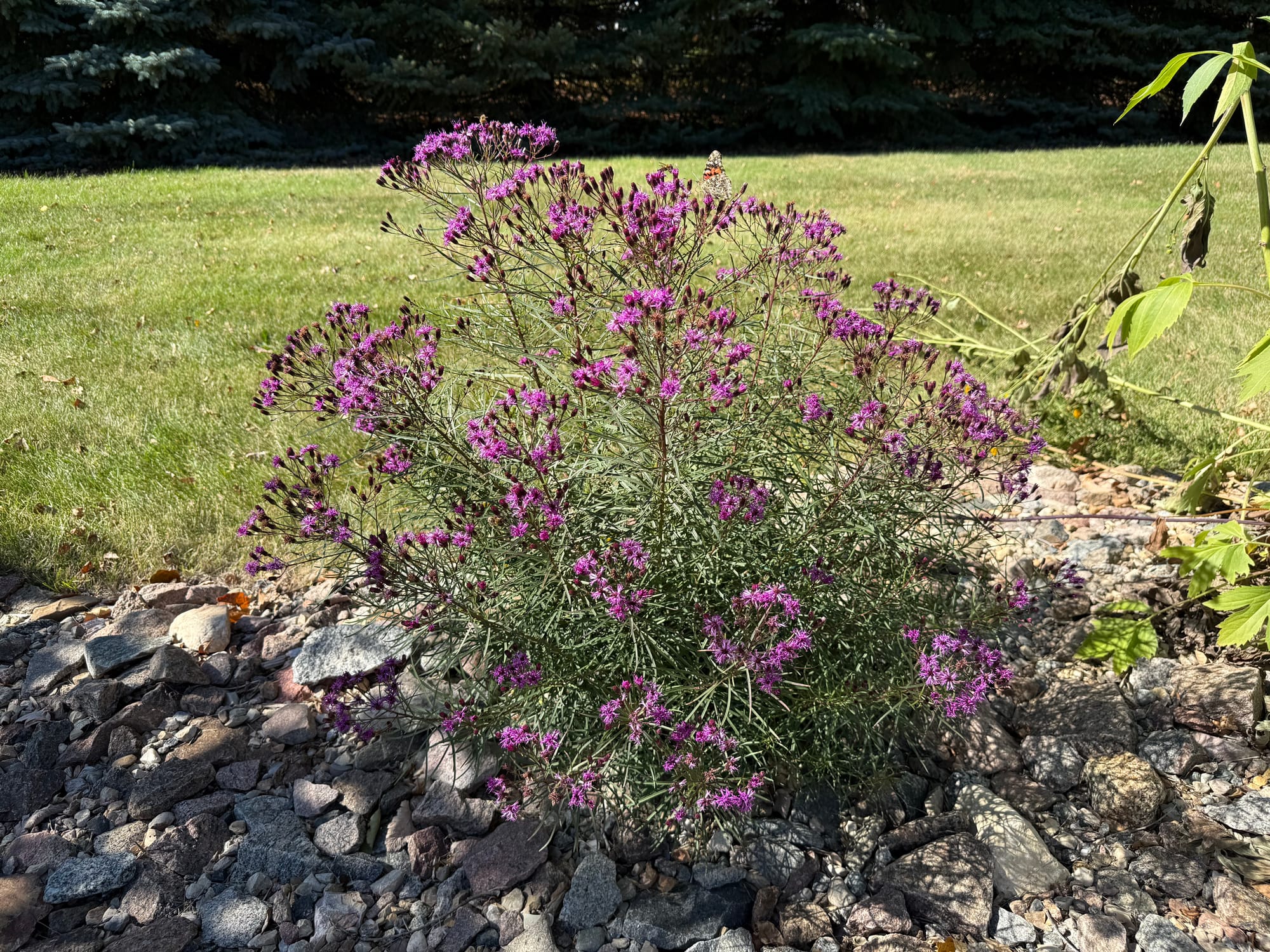
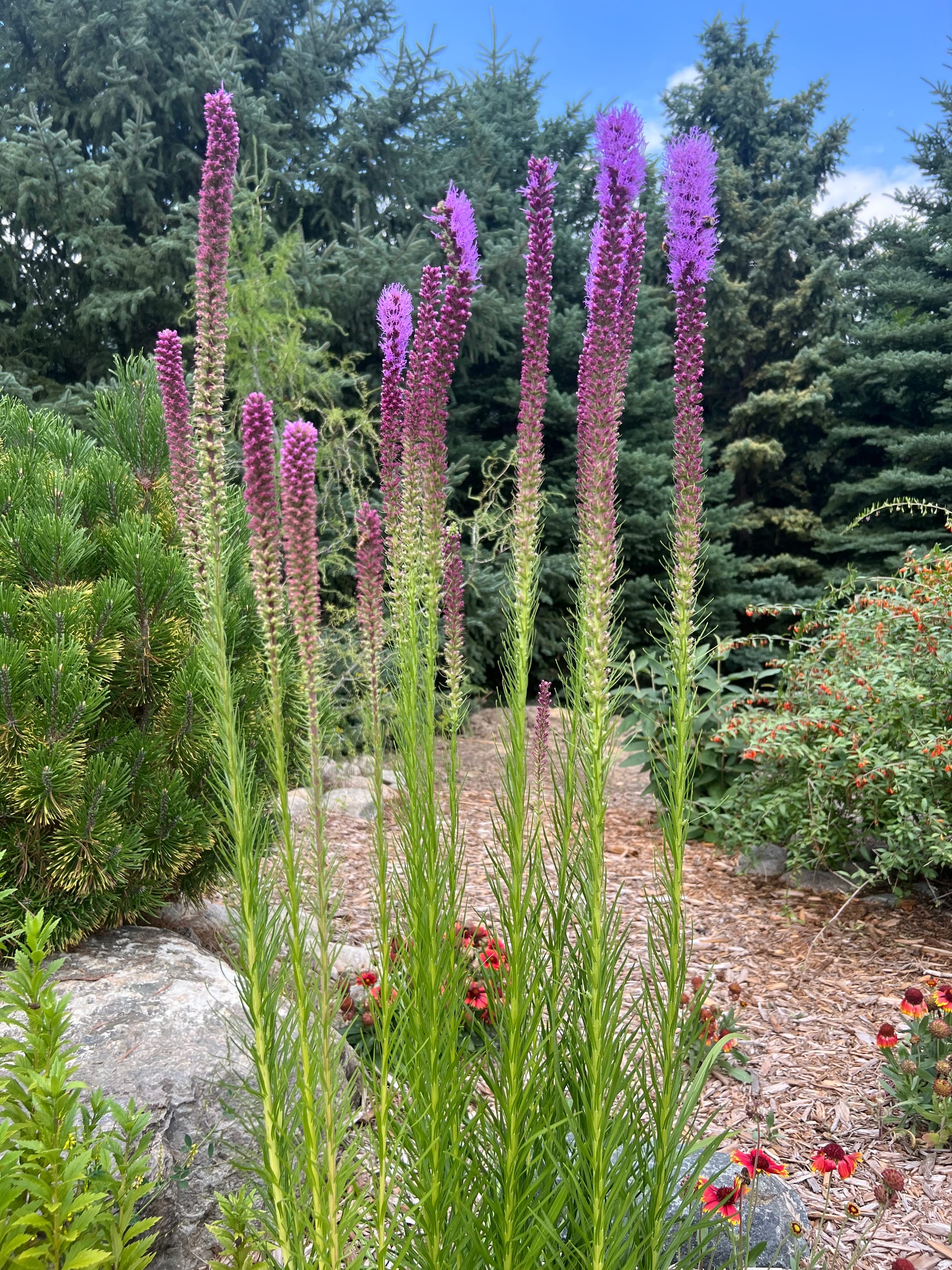
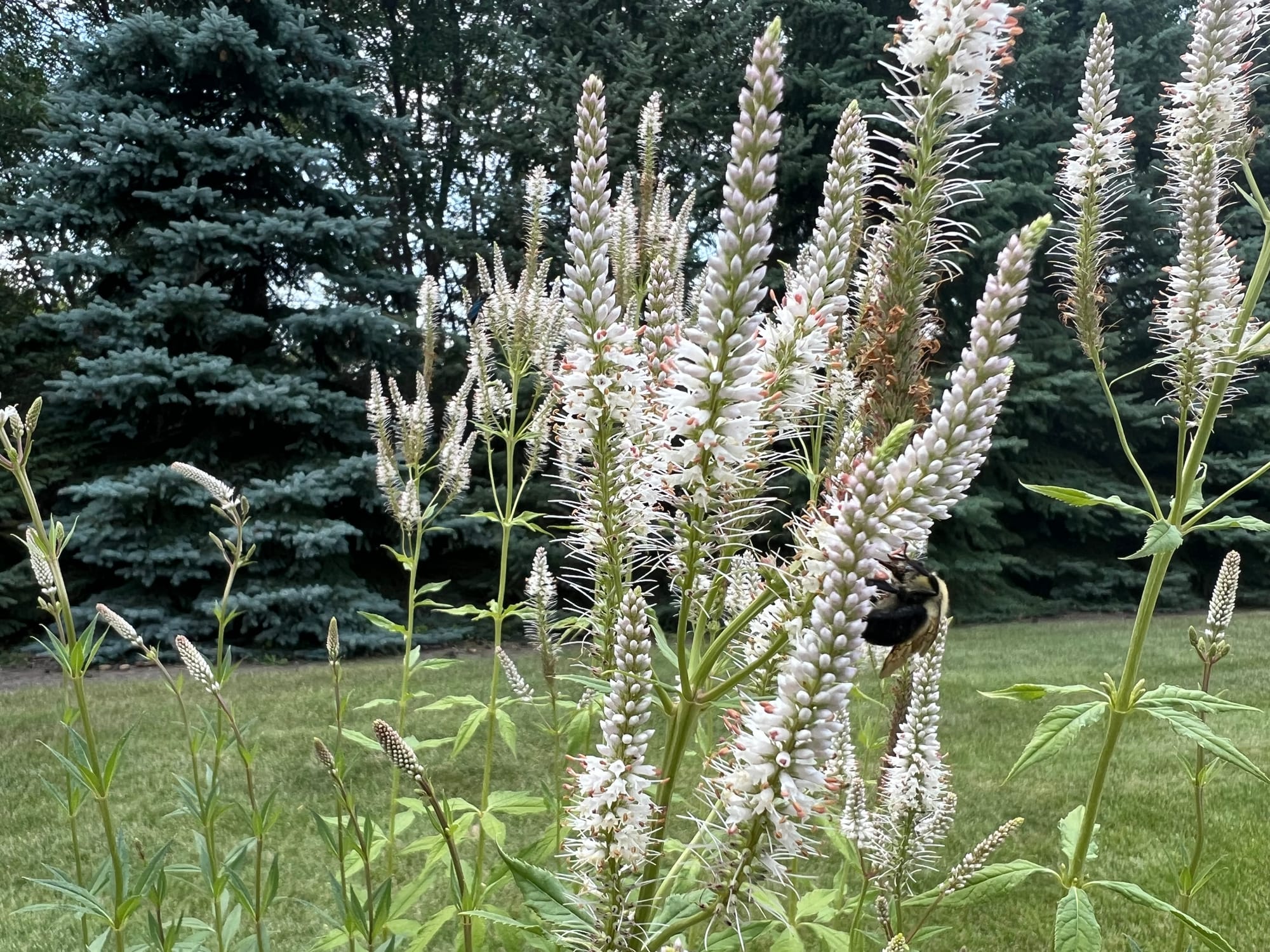
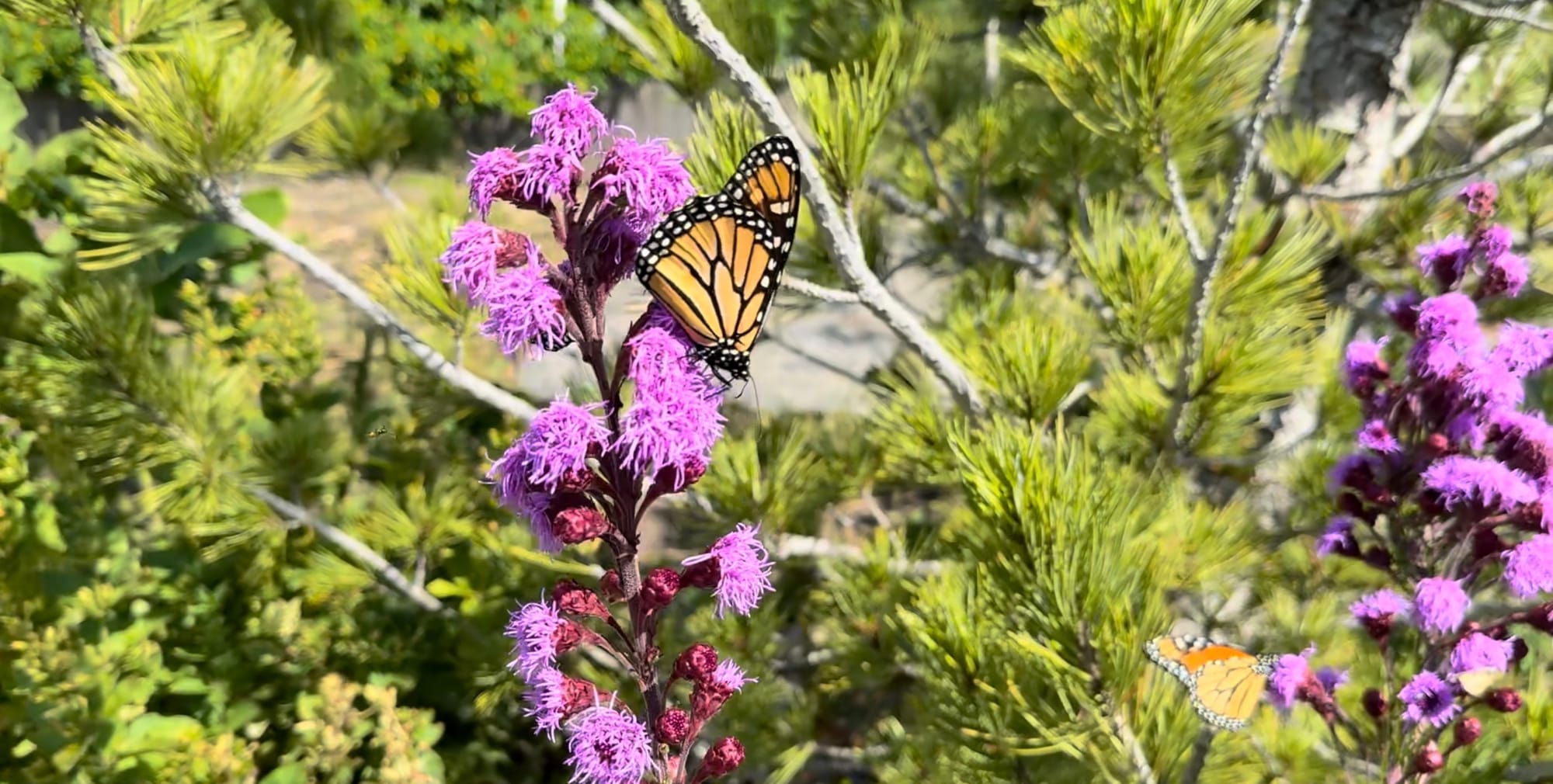
And even though it seems like herbaceous perennials are more commonly mentioned when talking about pollinator gardens, there are also many shrub and tree varieties up to the task.
Quick Fire Hydrangea is by far the best I’ve come across and attracts a wide range of insects. In the video link above, I recorded some of the action in slow motion. It’s incredible what you can capture with an iPhone! Seeing the insects up close and at a fraction of their speed reminded me of watching a Star Wars movie.
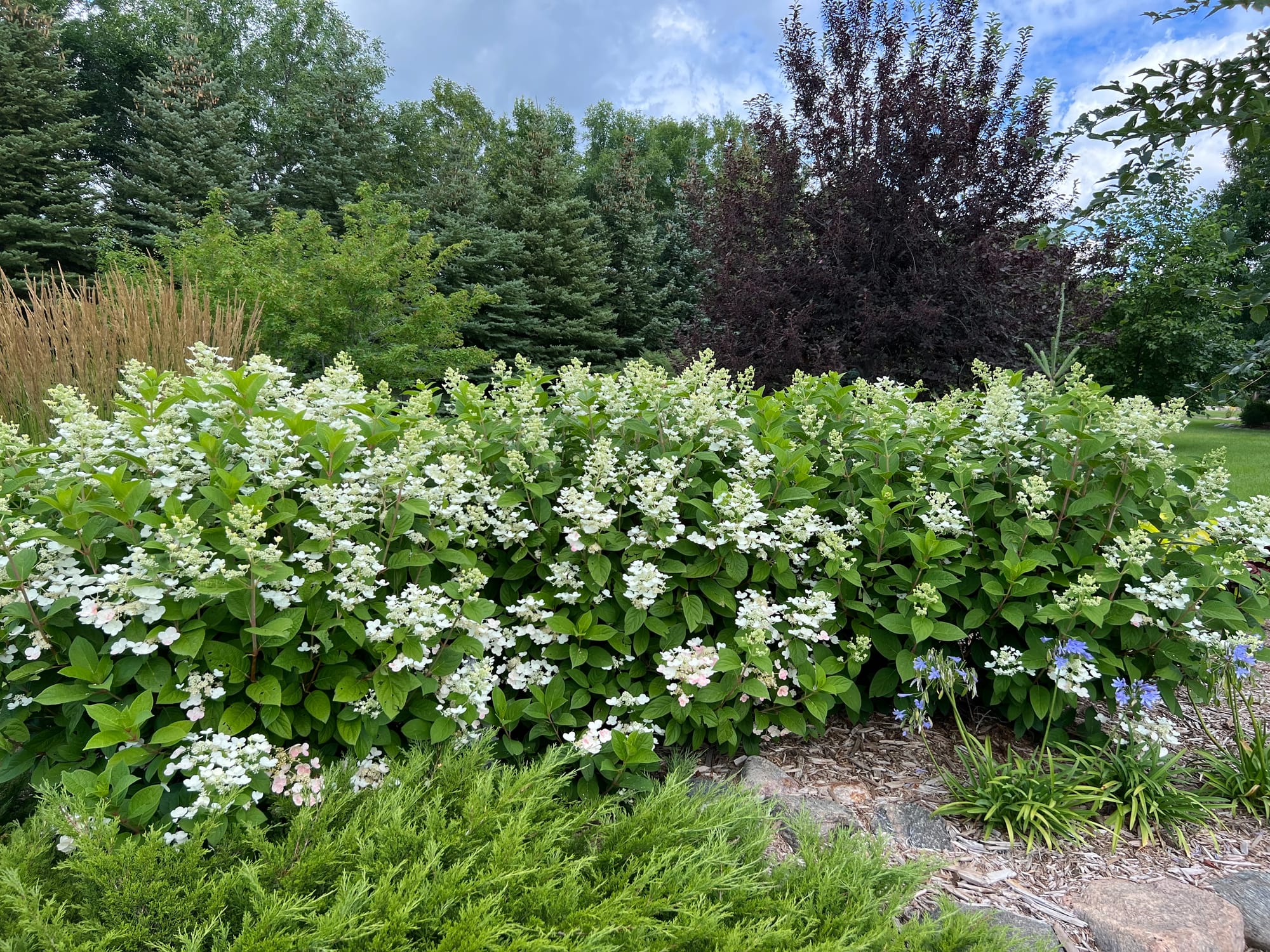
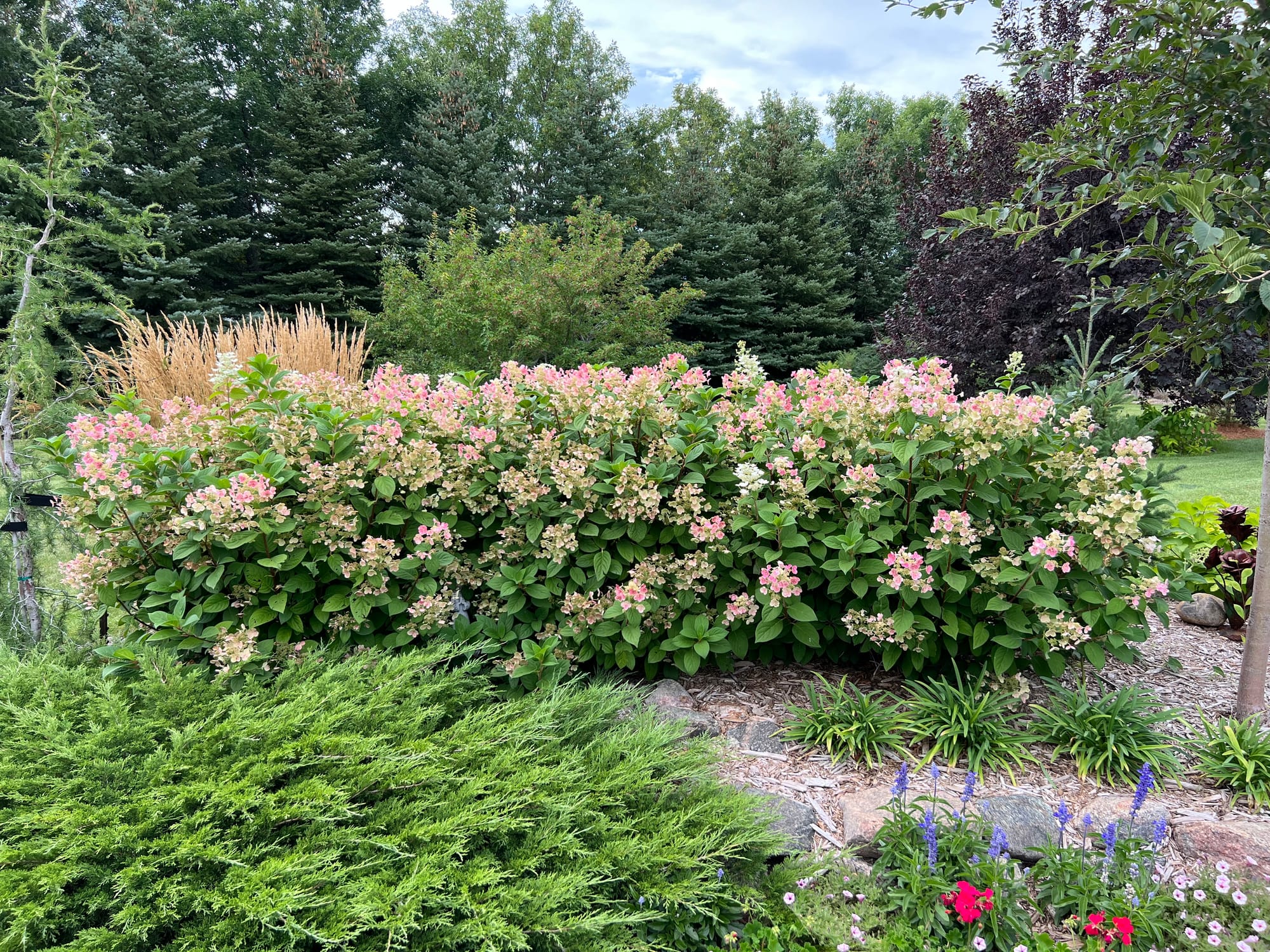
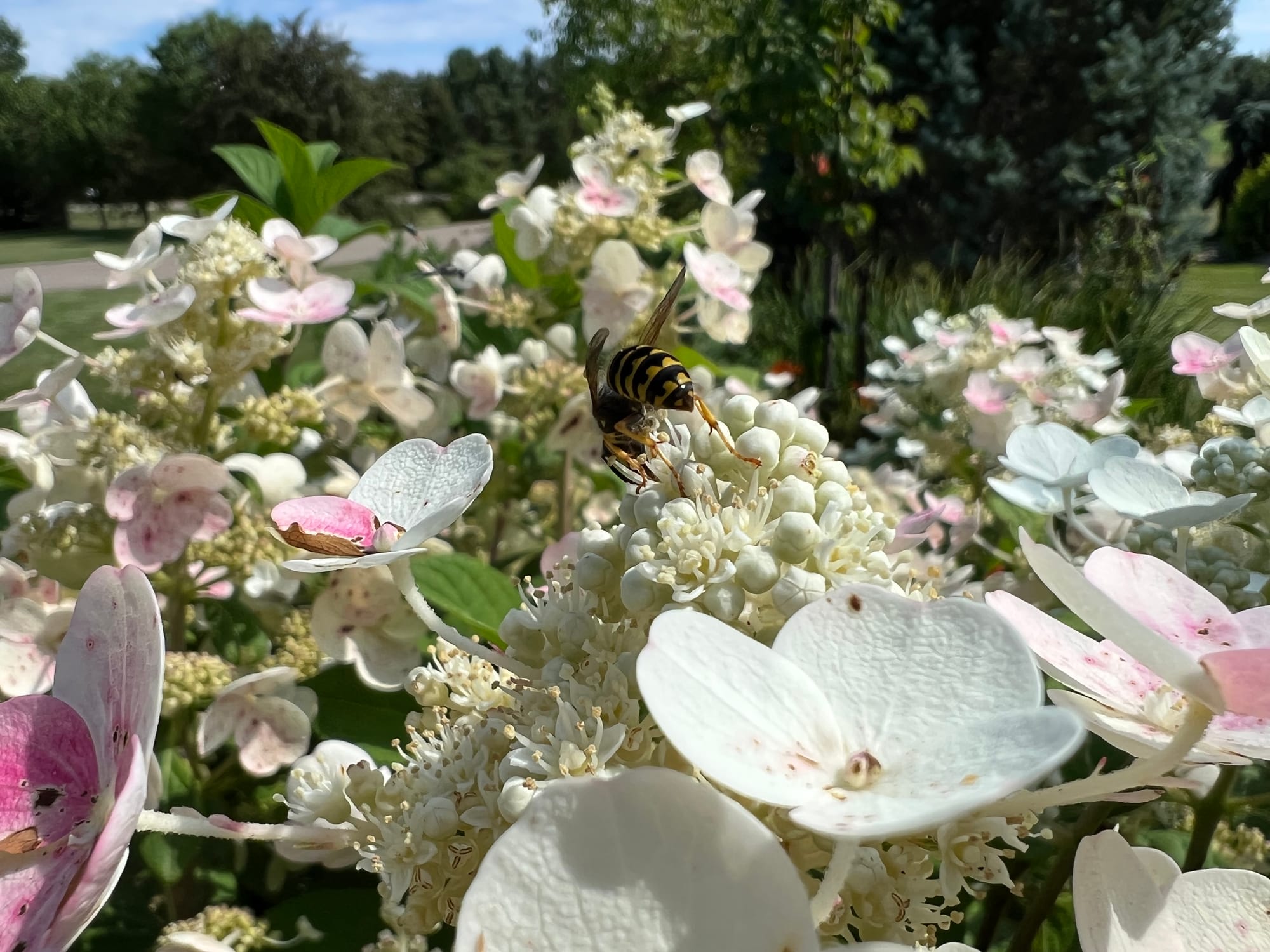
Quick Fire Hydrangea (Hydrangea paniculata 'Bulk') Early And Late Flower Colors
Emerald Carousel Barberry is another great shrub with season-long interest and is packed with yellow flowers in the spring.
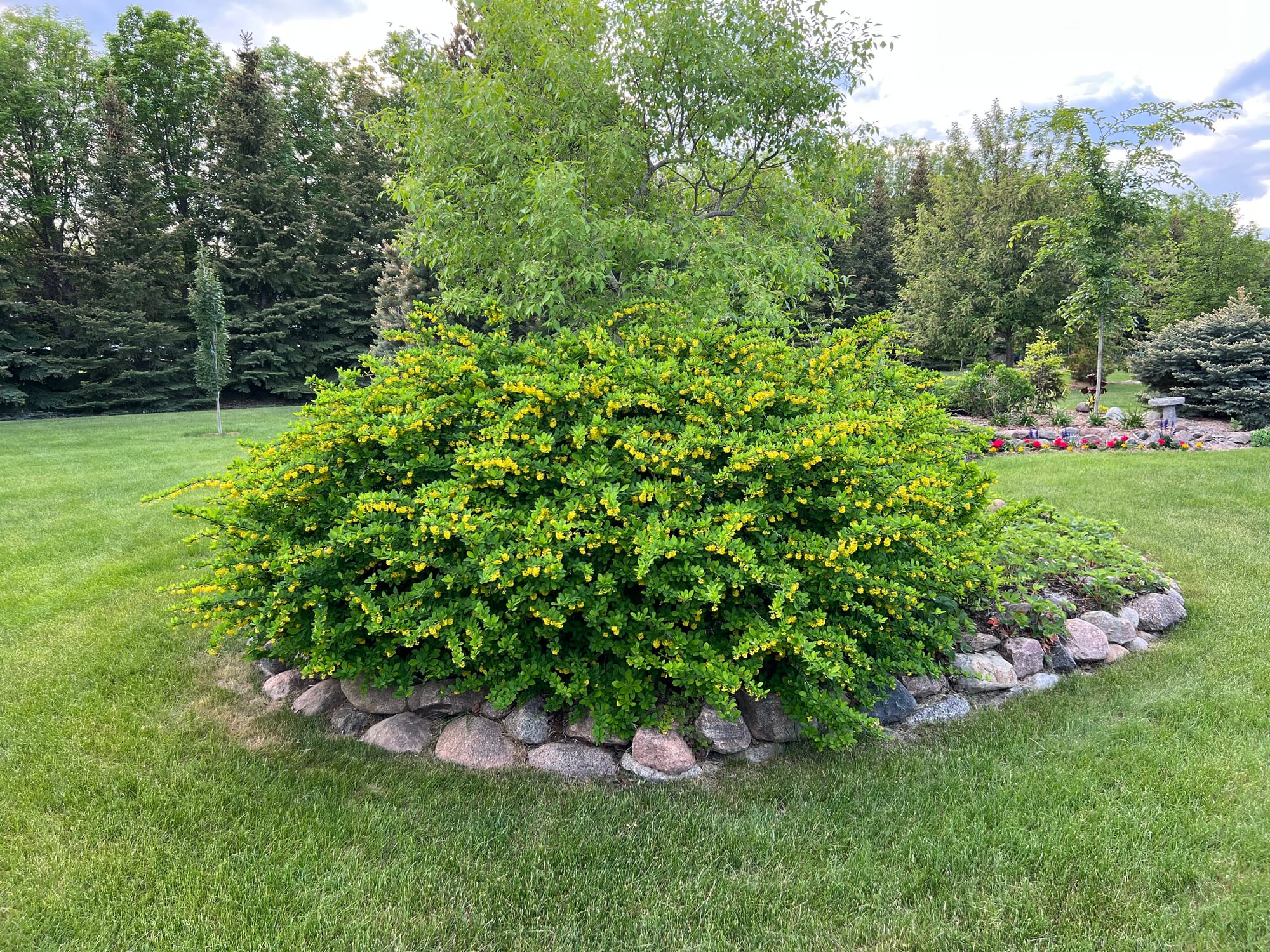
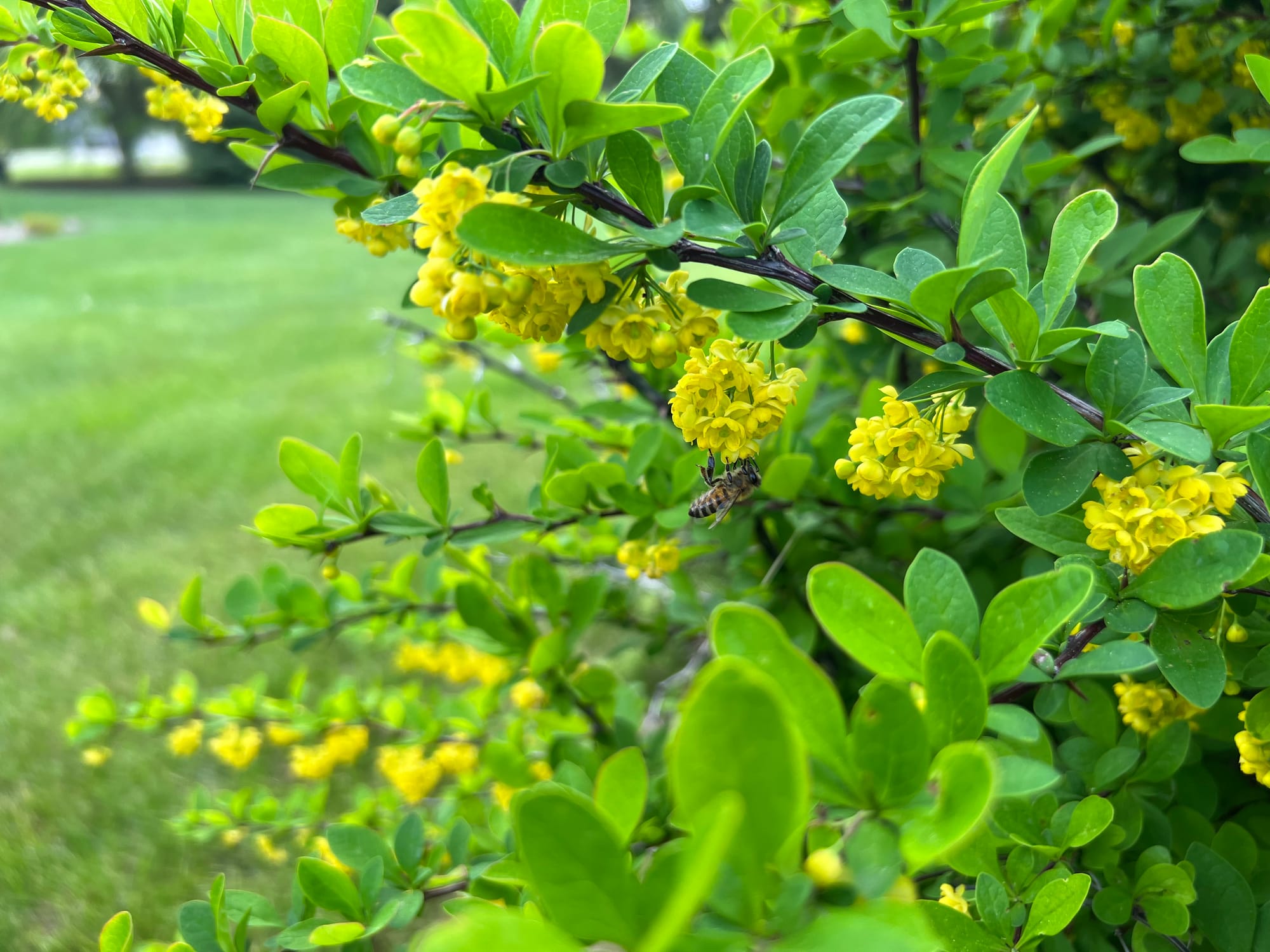
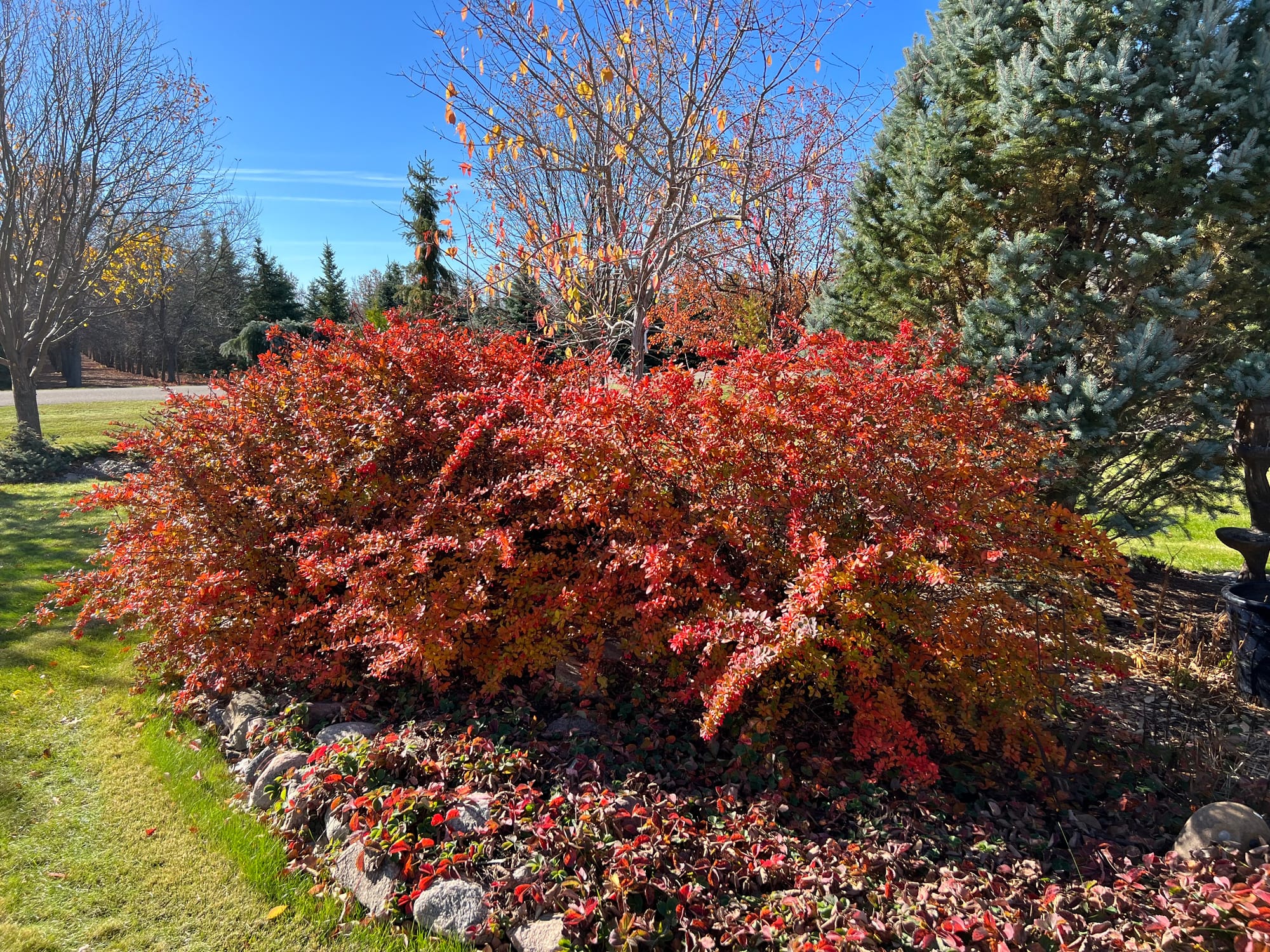
Emerald Carousel Barberry (Berberis x 'Tara') Spring and Fall
A couple of trees for the list include the Honeylocusts and Lindens.
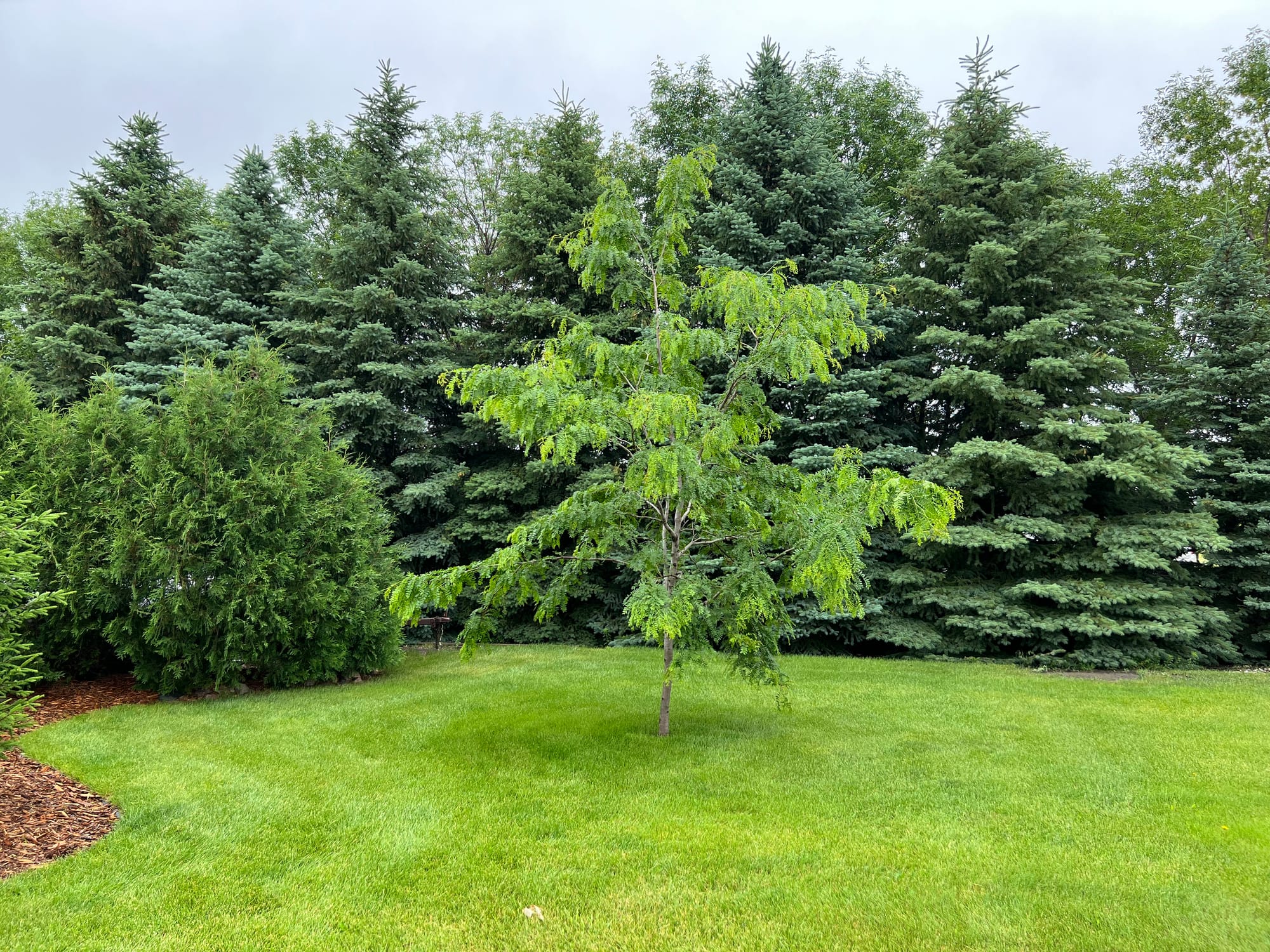
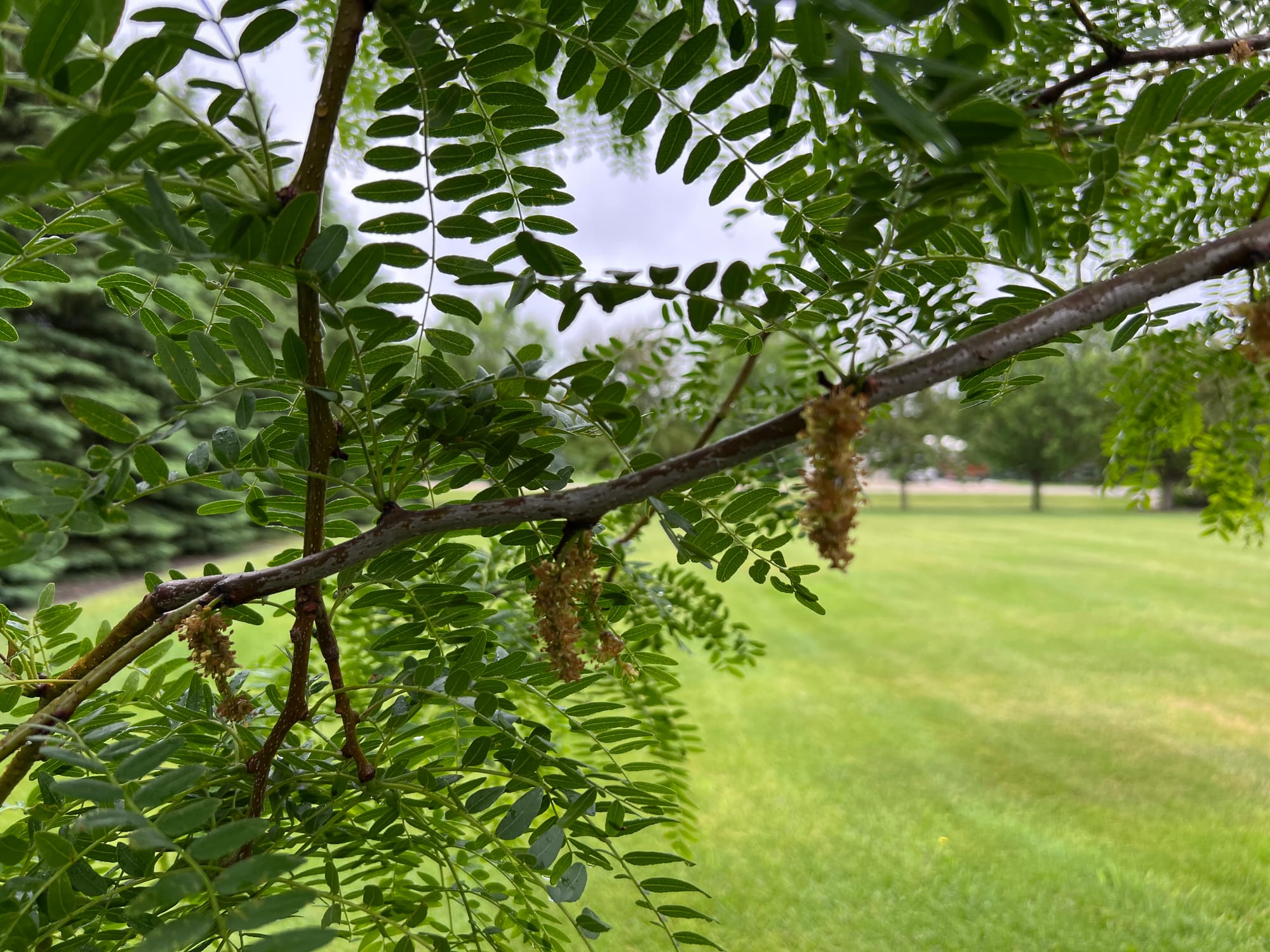
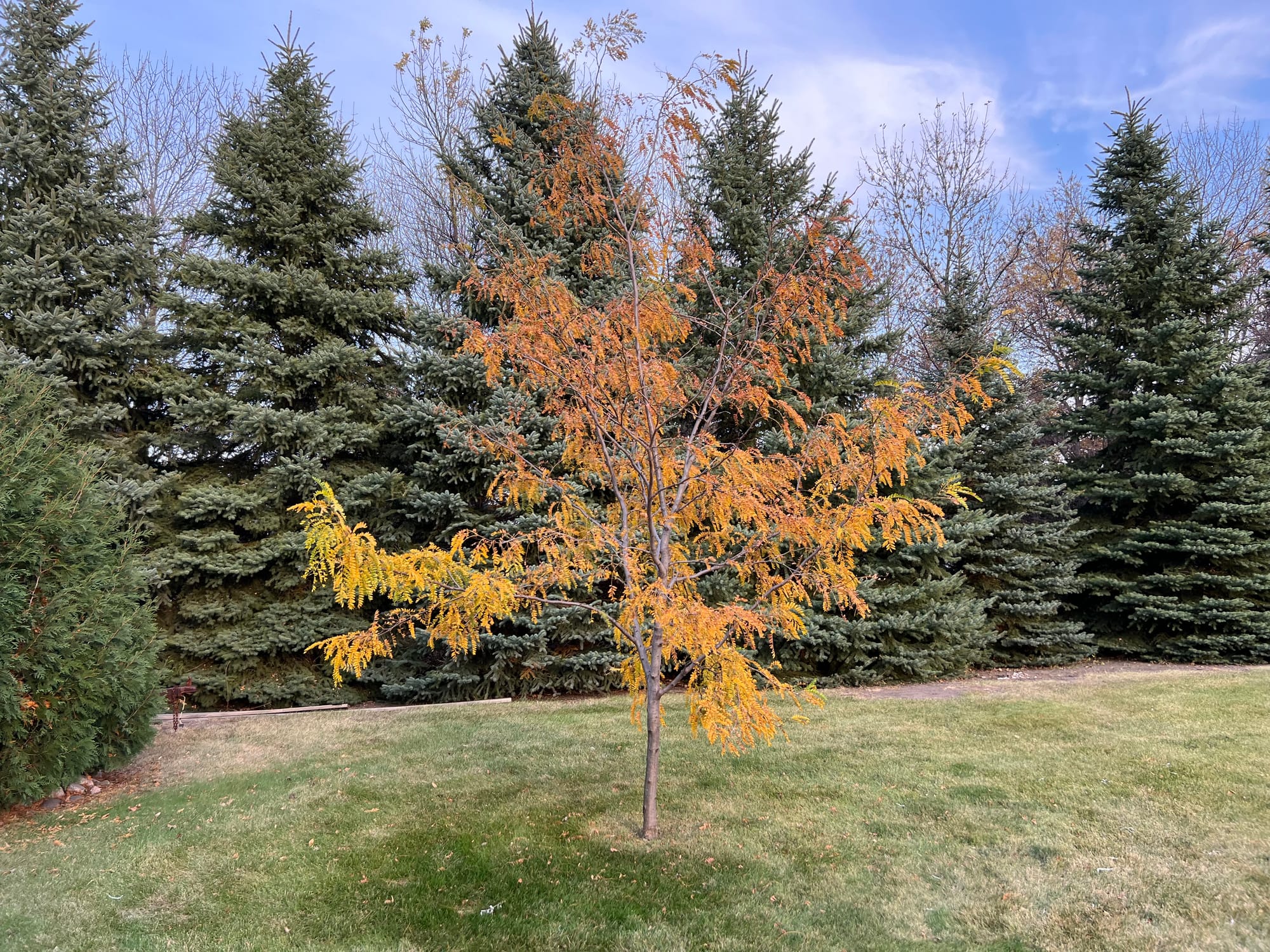
Northern Acclaim Honeylocust (Gleditsia triacanthos 'Harve') Spring and Fall
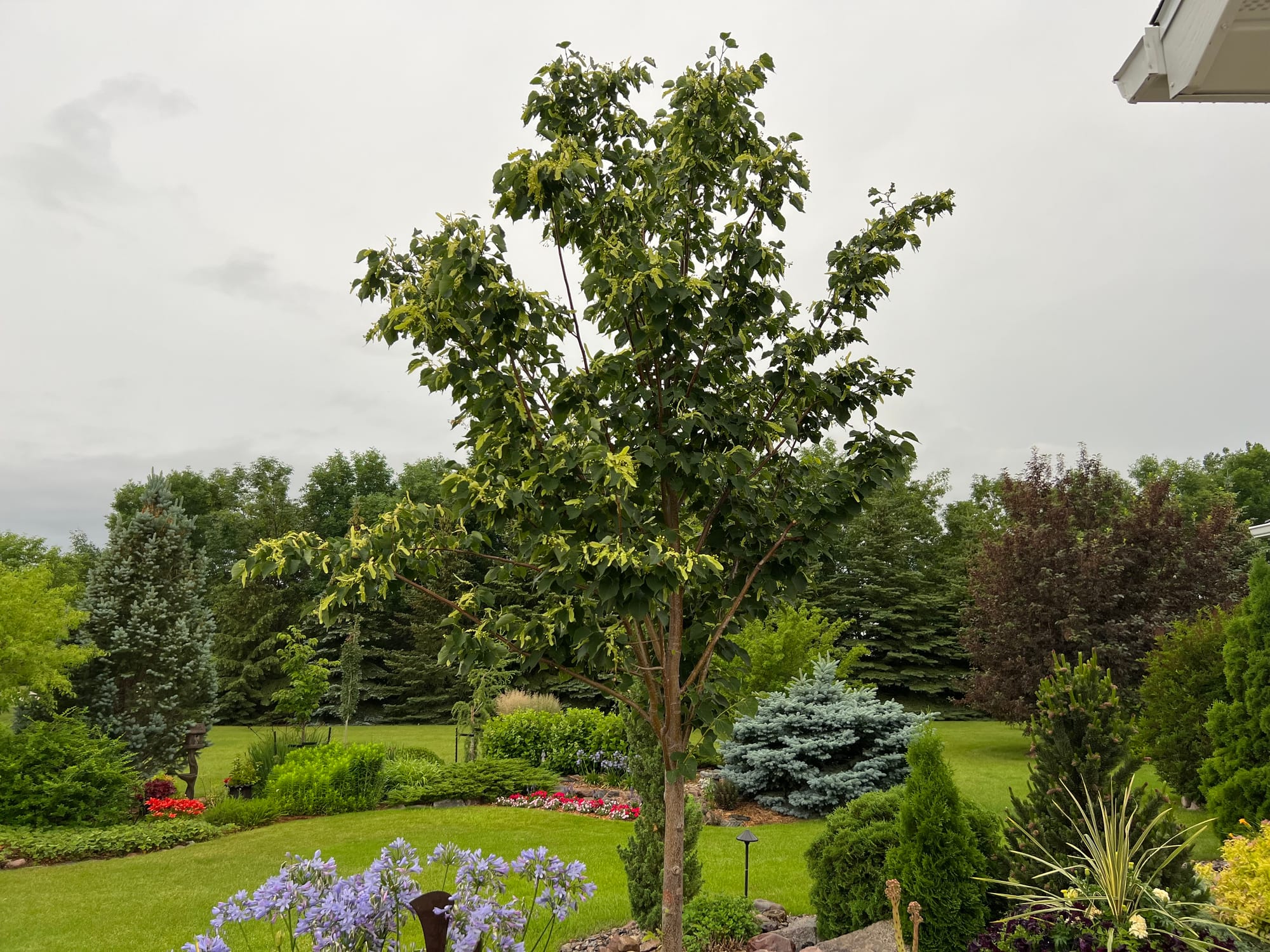
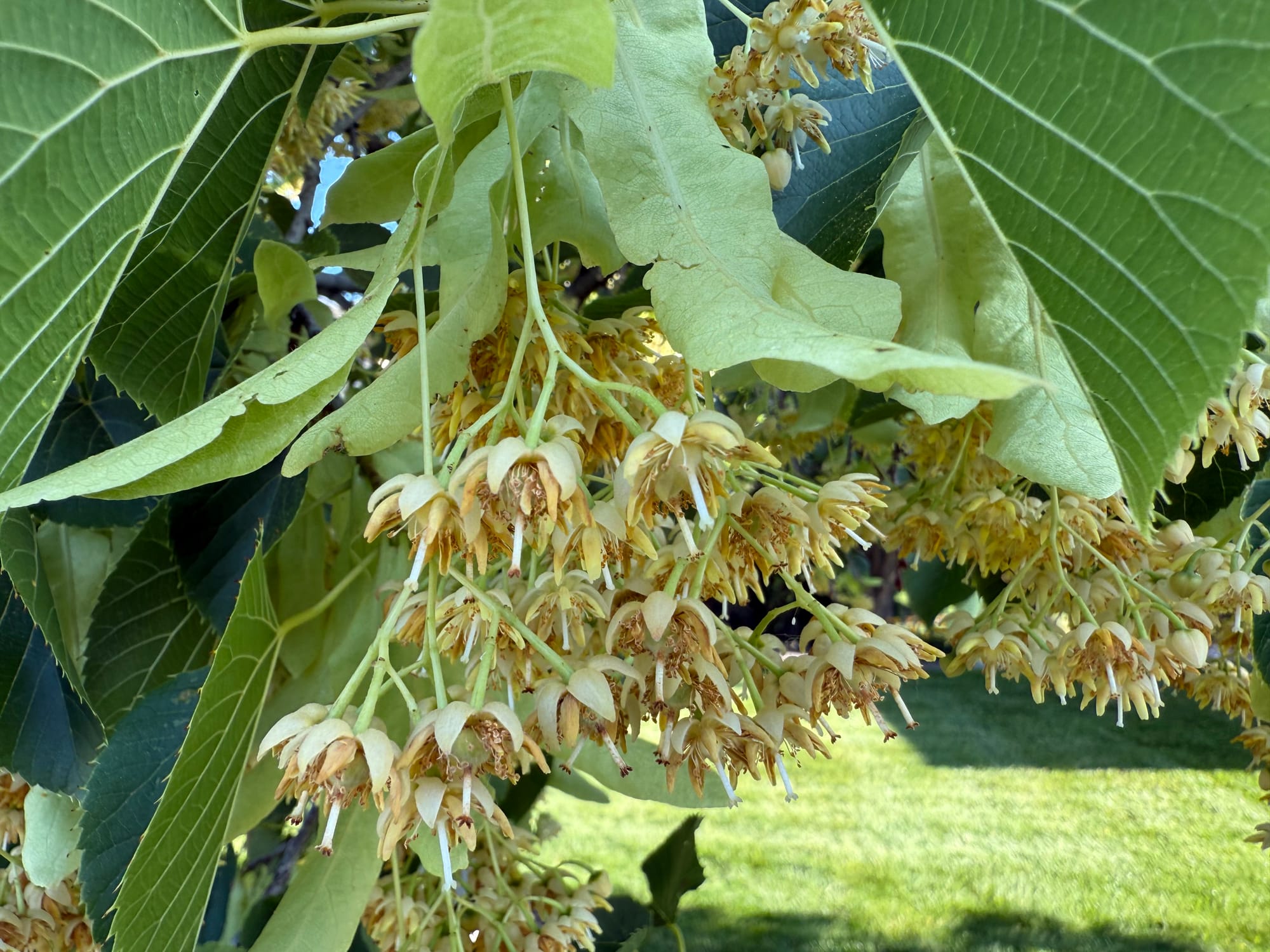
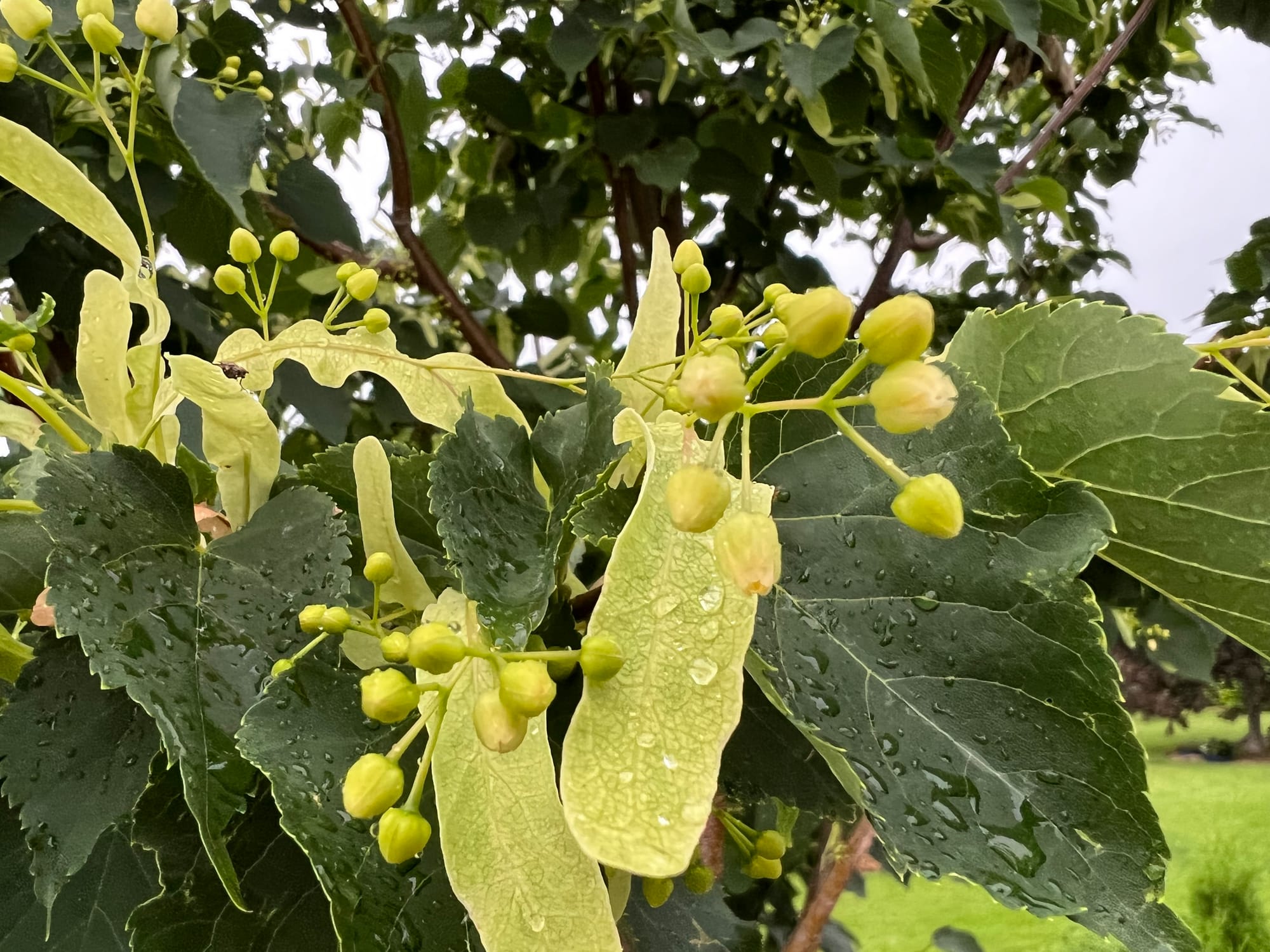
Greenspire Linden (Tilia cordata 'Greenspire') Flower and Developing Seeds
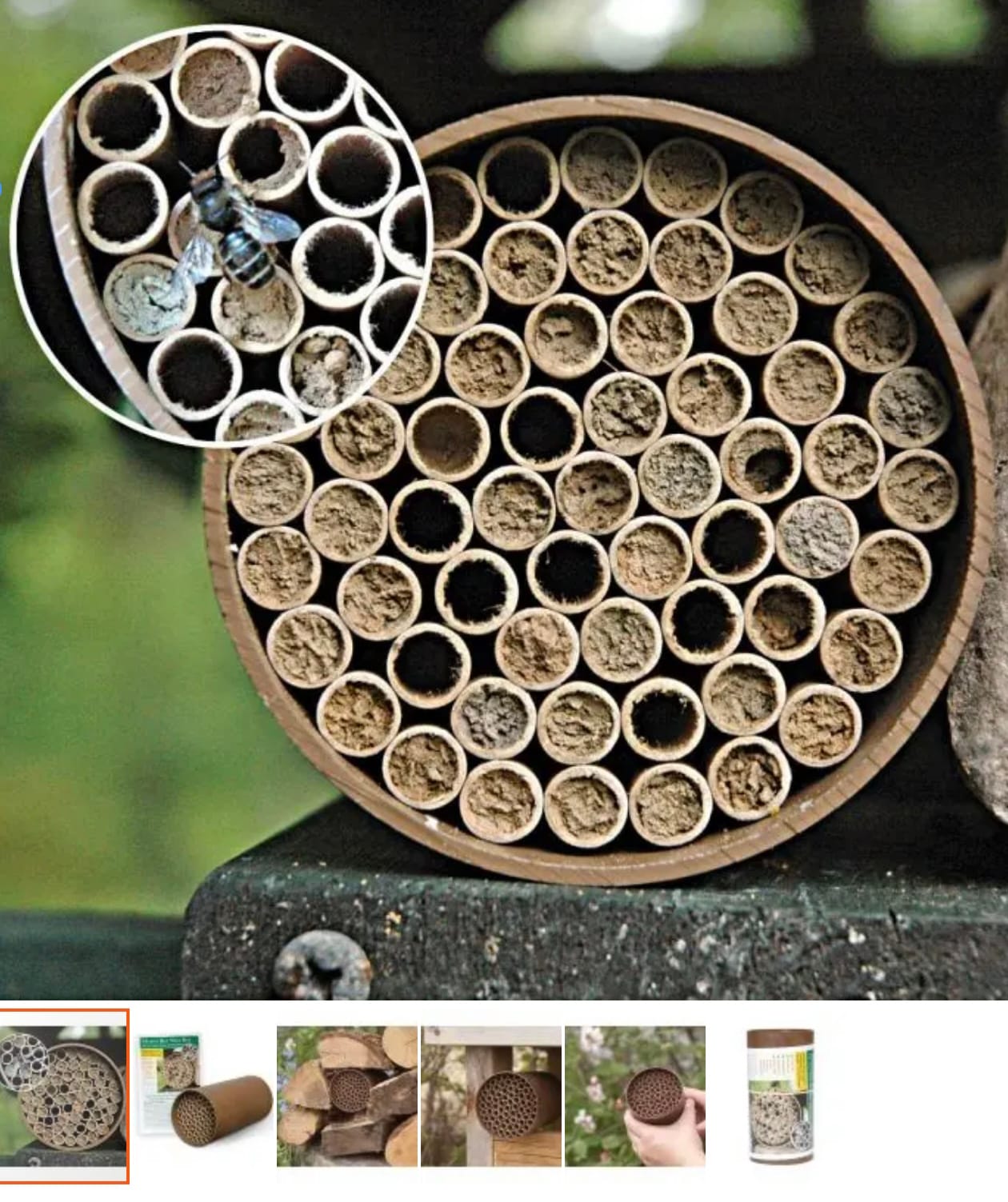
Mason Bee Nest 52 Tube
Enhance pollination and promote abundant gardens with the Mason Bee Nest featuring 52 tubes.
When you purchase through links on this site, we may earn a small commission at no additional charge to you.
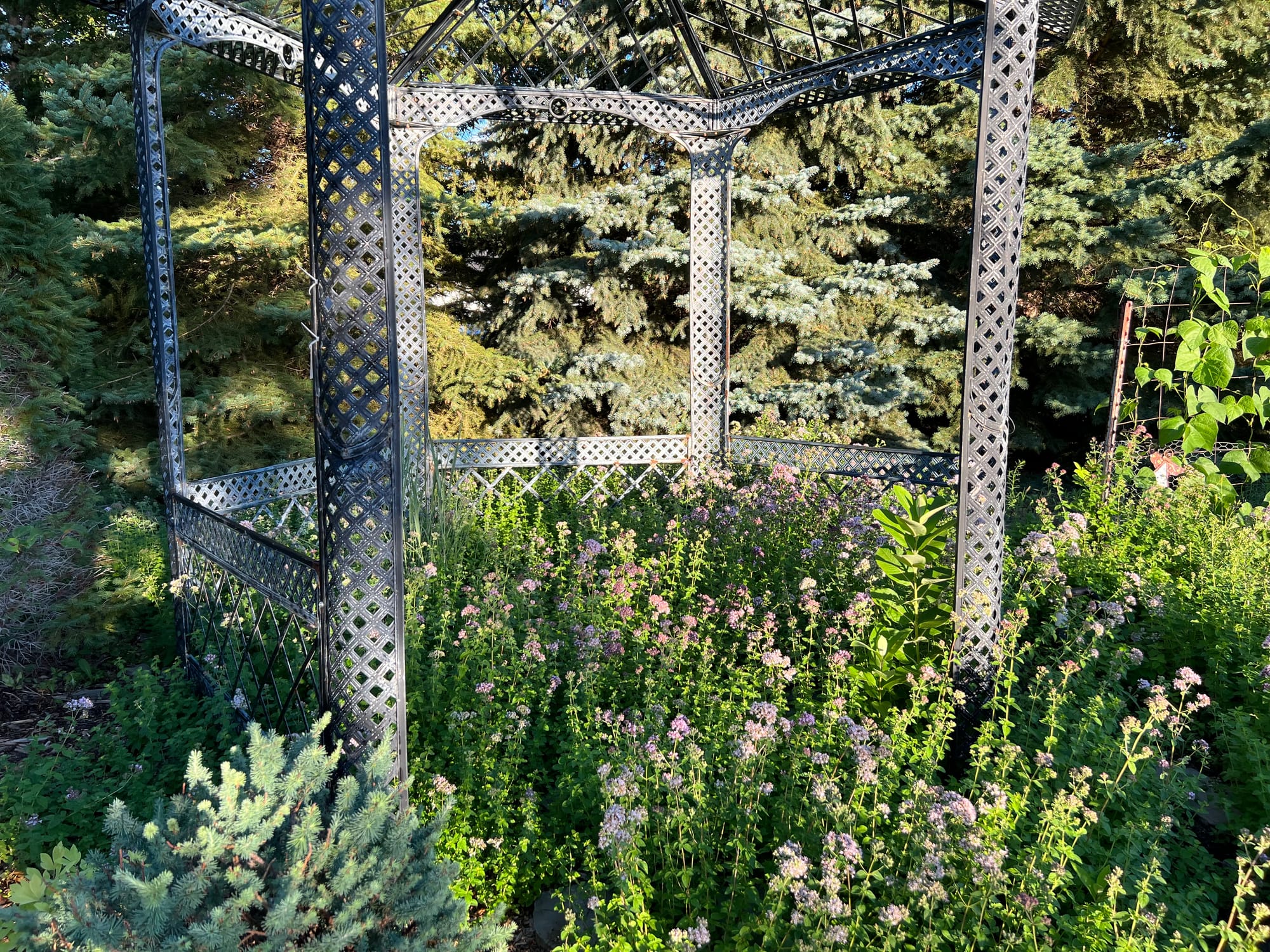
This Marjoram patch (accident) under this gazebo turned out to be one of our greatest summer treasures. We planted a couple of small plants about 10 years ago, and they have since self-seeded and taken over this location. This area hums late spring into early summer when hundreds of bumblebees and honeybees are, well, busy as a bee.
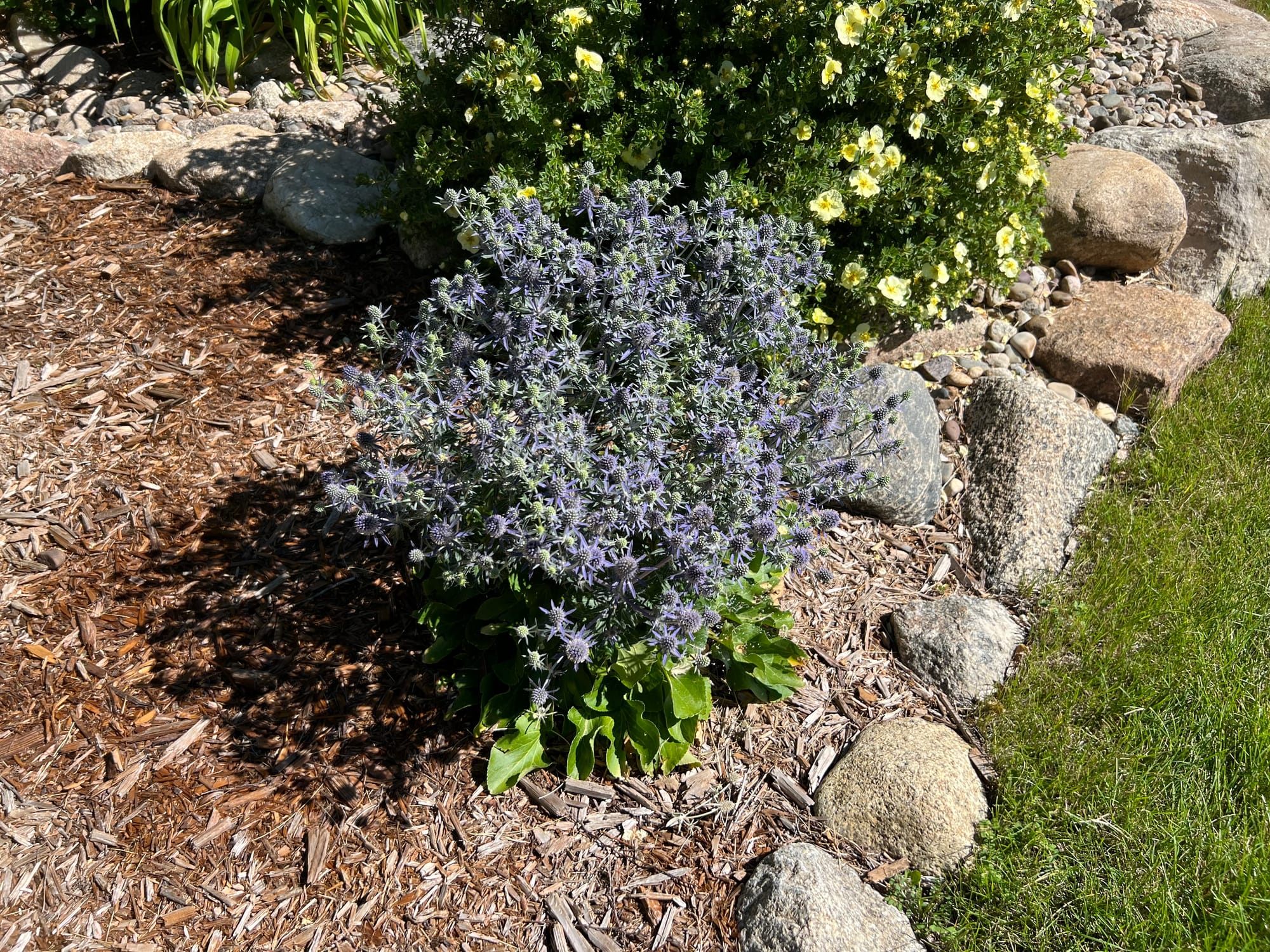
Sea Holly was a pleasant surprise and attracts a wide variety of different insects with its interesting silver-blue to purplish-blue flowers. We have a few popping up from seed each year now, so we are transplanting some new plants into other garden beds. This is a great little plant.
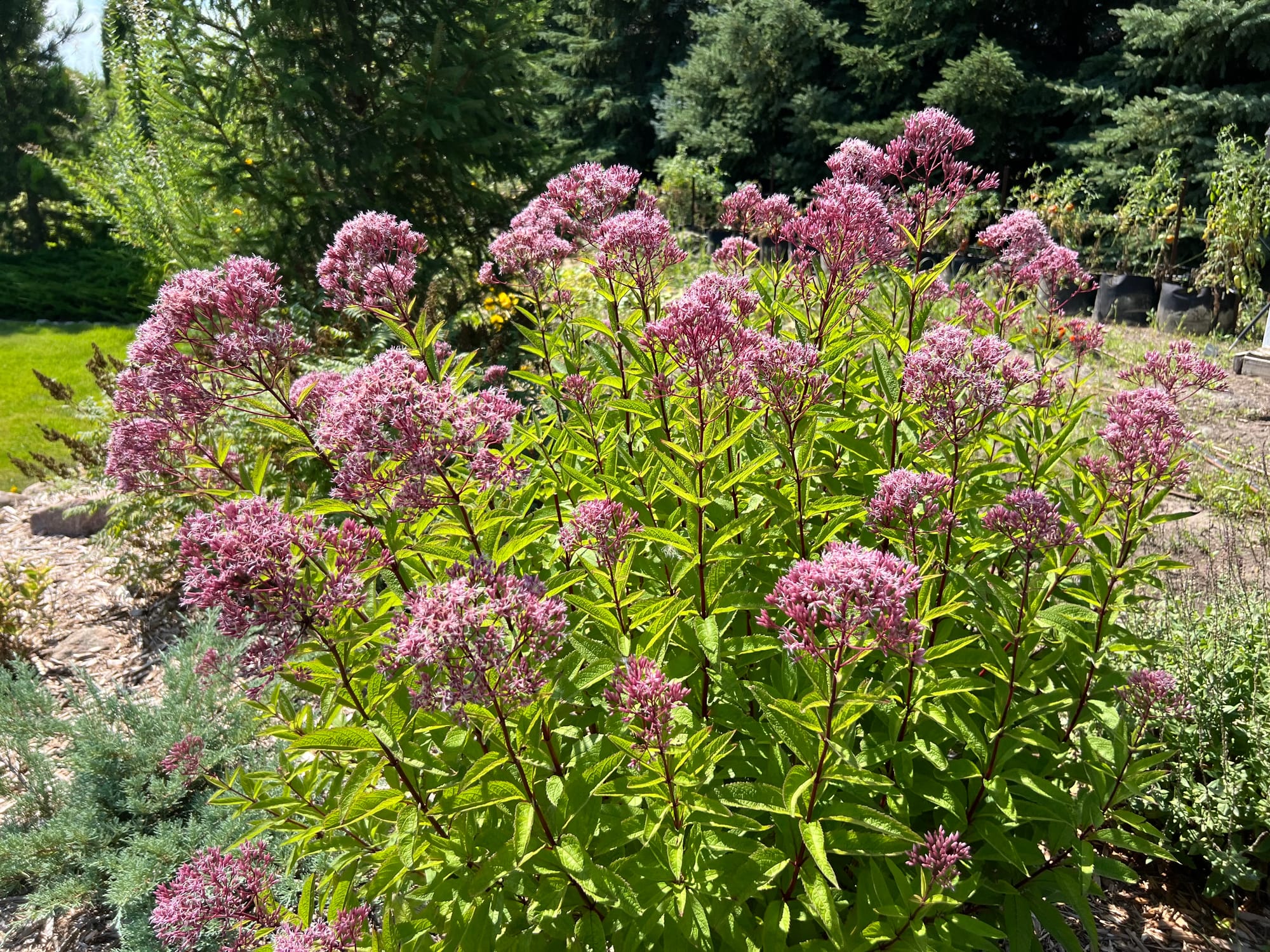
Joe Pye Weed is a late-season flowering perennial growing to as high as 6-8 feet. It takes its time to emerge in the spring, but once it gets going, it is a fast grower and does a great job drawing in both bees and butterflies. If interested, here's a link to an earlier video where I highlighted several other tall perennials (but not necessarily tall on pollinating).
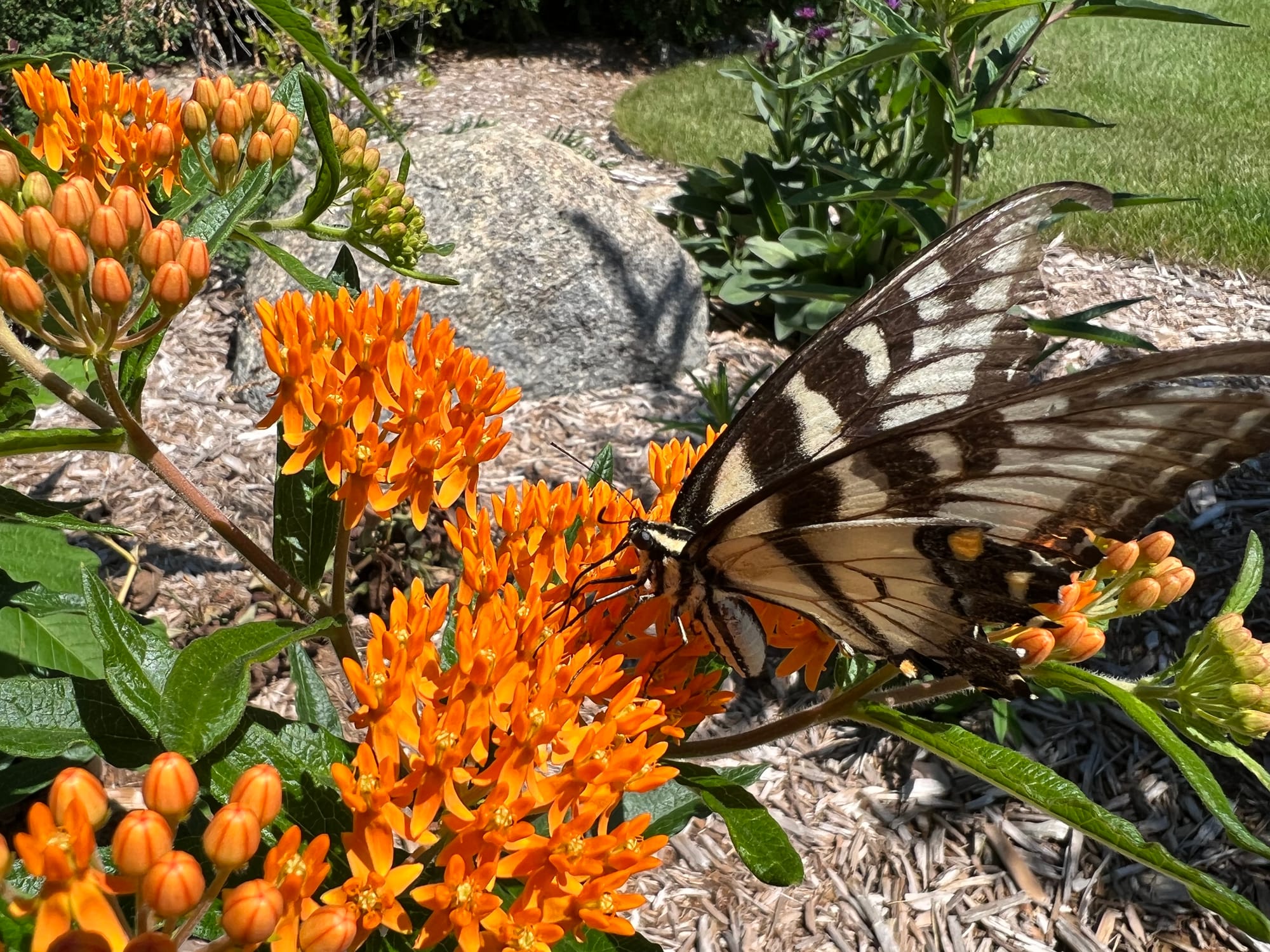
Butterfly Weed has been true to its name, except for the “weed” part, as ours died recently. But what a beautiful orange flower, and it’s always fun to observe the butterflies on this perennial.
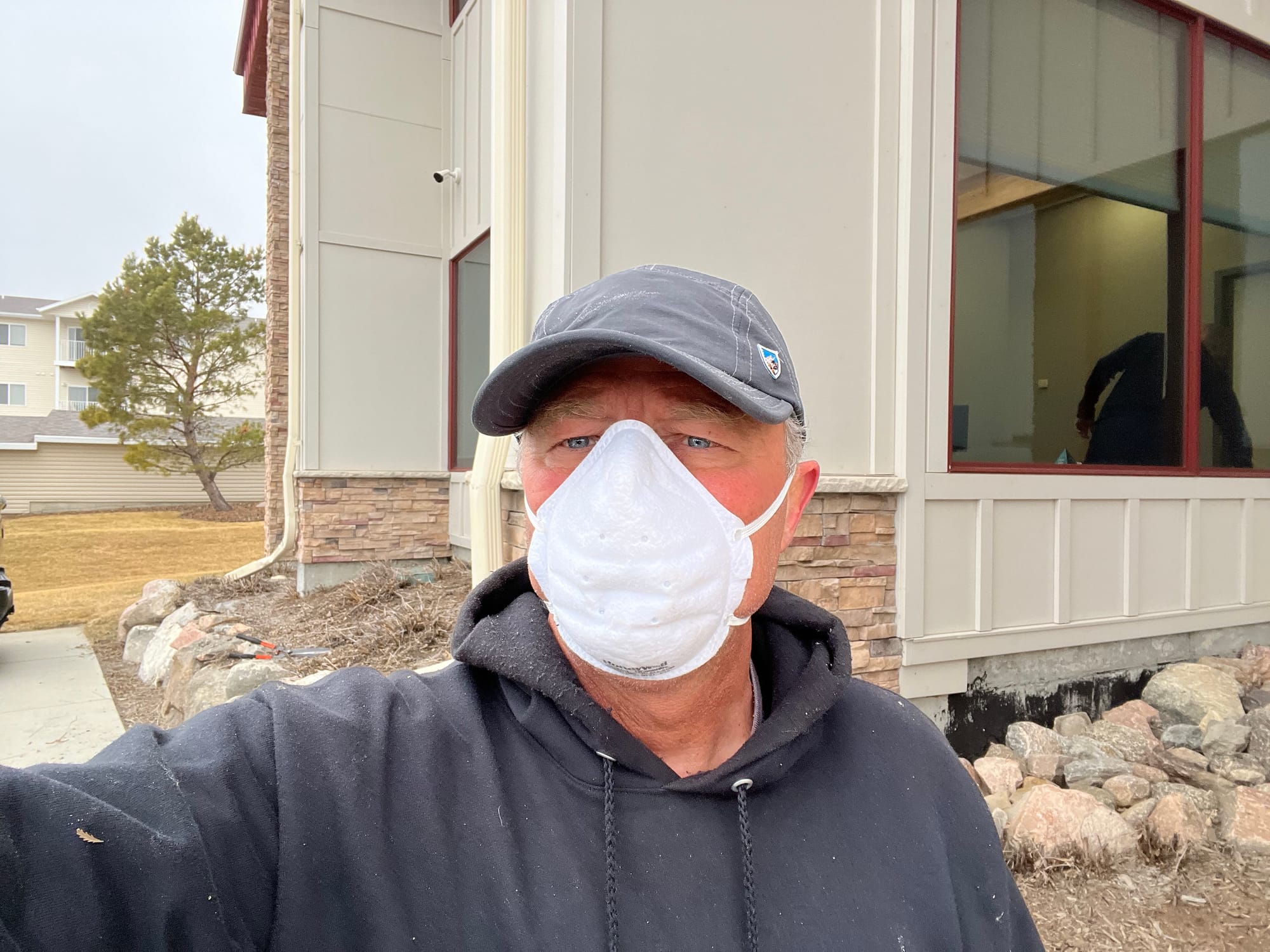
Russian Sage is a tough perennial and widely grown in my area (Zone 4, Northern Great Plains btw). I’ve noticed it is a favorite for the bumblebees, but it does spread and self-seed, so make sure you have the room or are able to contain it if necessary. Each spring, I have to cut back a large stand of this sage for a customer, and the smell is so powerful and irritating to the throat that I end up wearing a mask to avoid uncontrollable coughing.
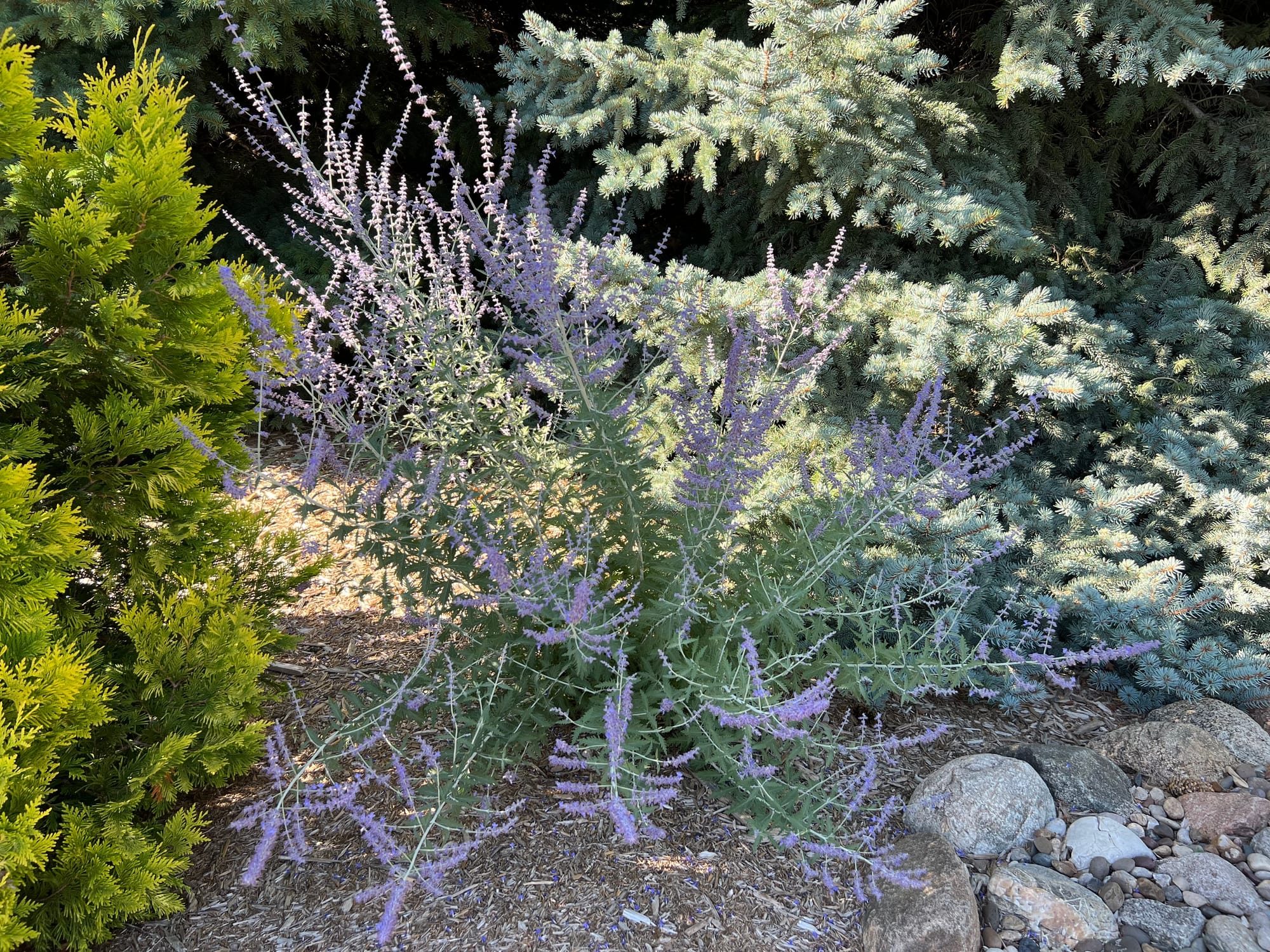
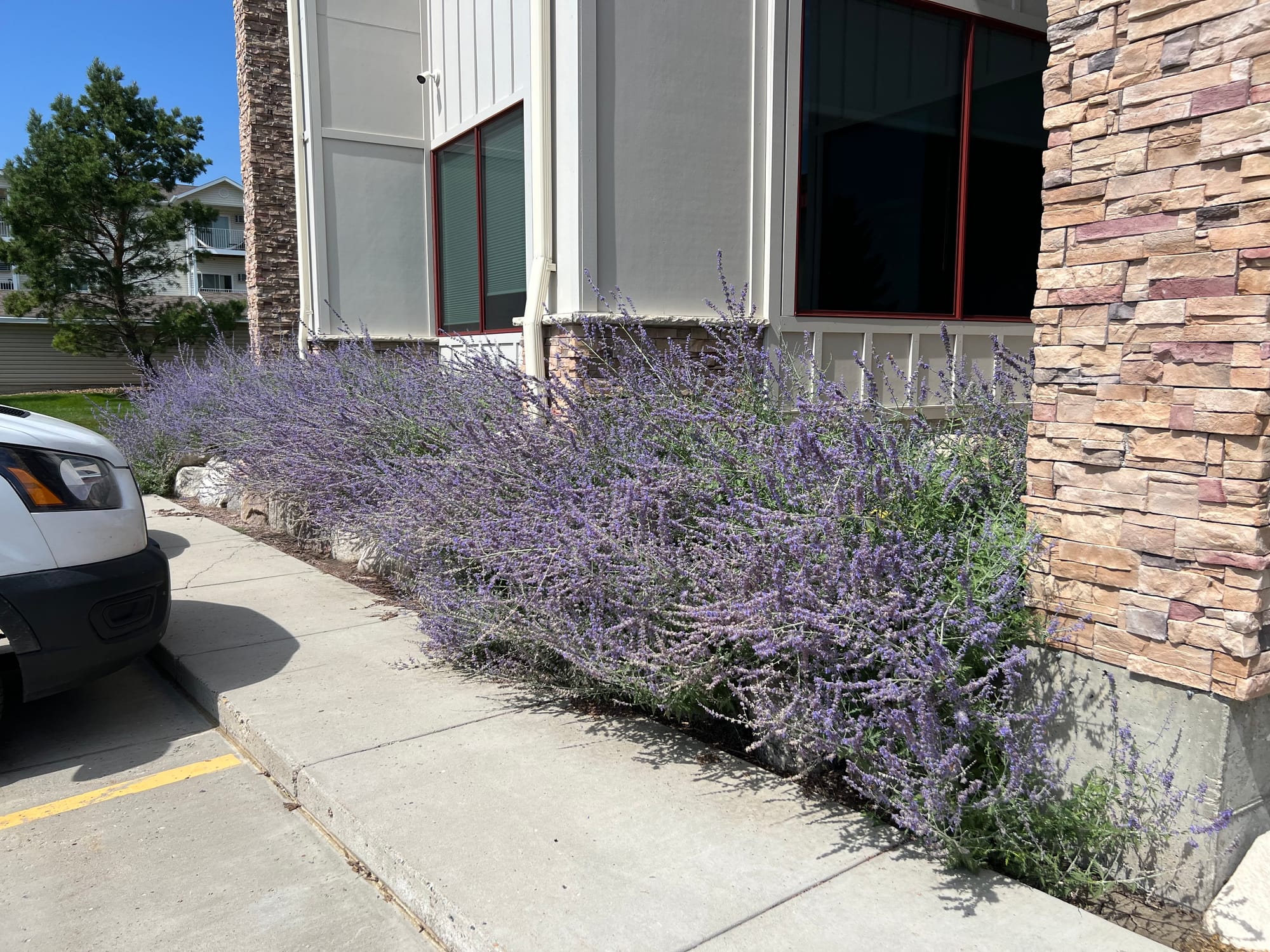
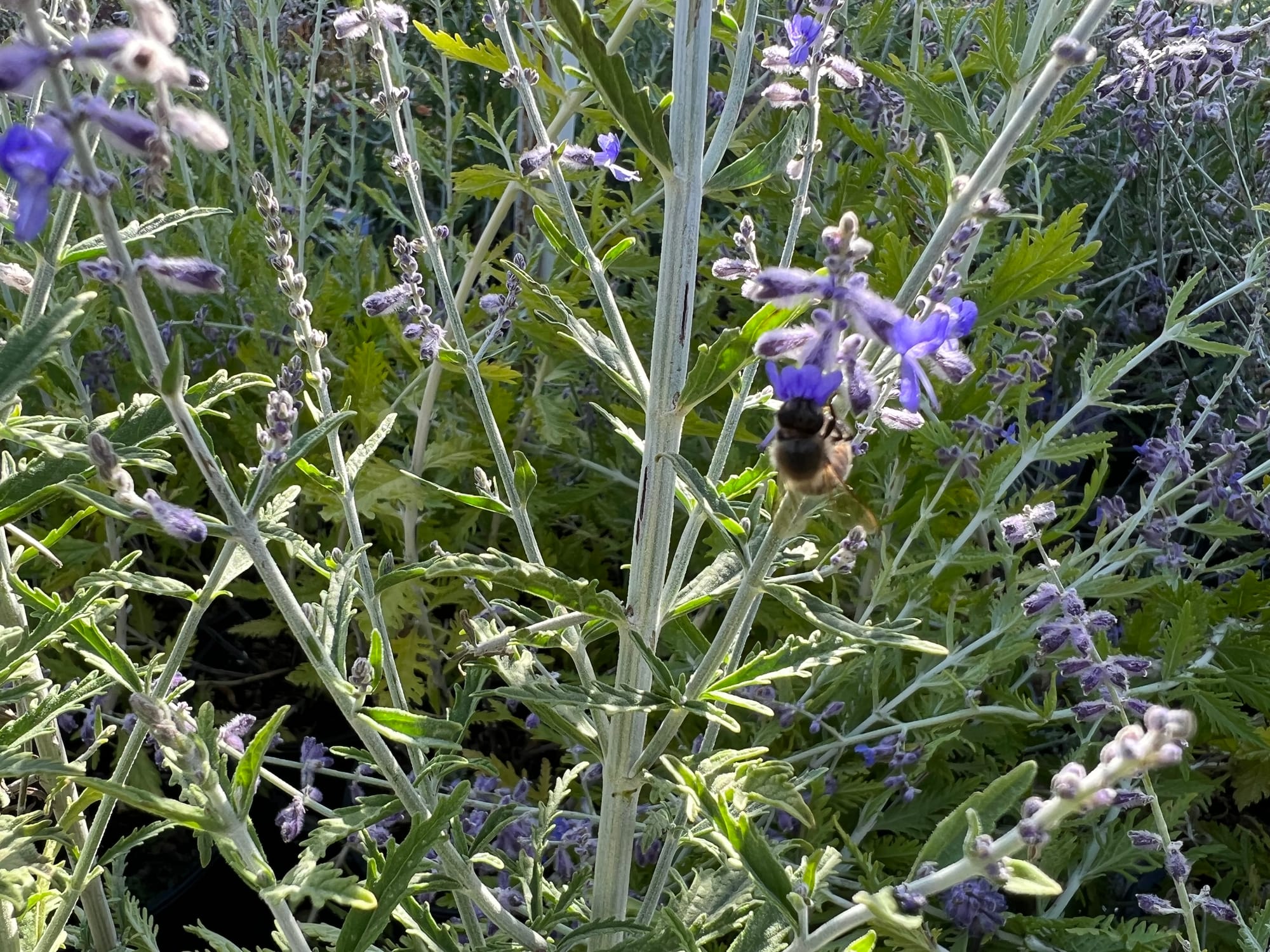
Russian Sage (Salvia yangii - Perovskia atriplicifolia)
Like Russian Sage, Salvia is another tough perennial and great for attracting bees. This perennial has also self-seeded in many areas in our landscape. Once they become too dominant in an area, I’ll transplant them to new locations. I’m mostly relocating them next to our vegetable garden, as they usually flower about the same time as our tomatoes, and bumblebees are great at providing the vibration and movement that helps pollen move within a tomato flower. Various blue-and-white Salvia varieties are commonly sold at garden centers.
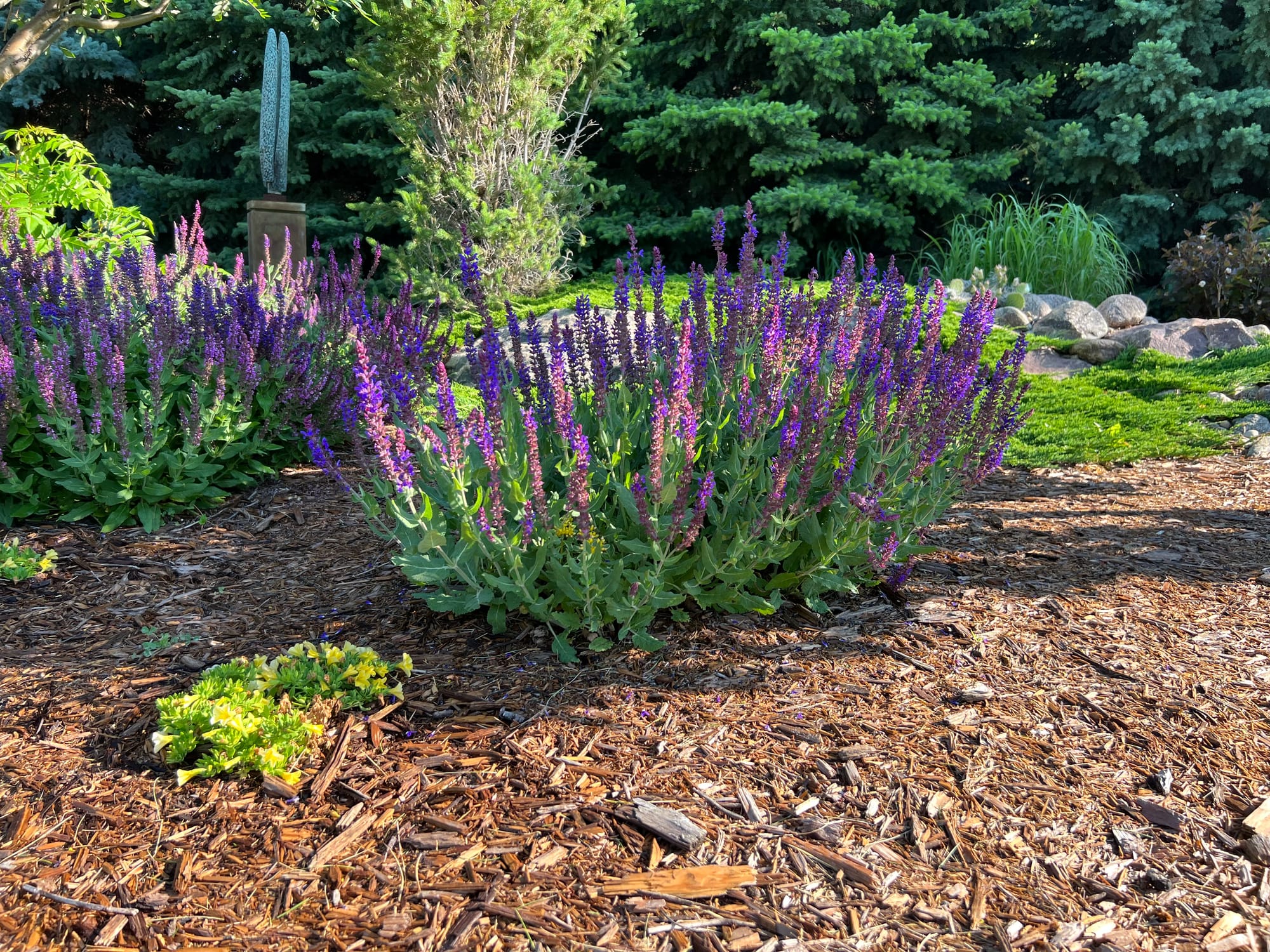
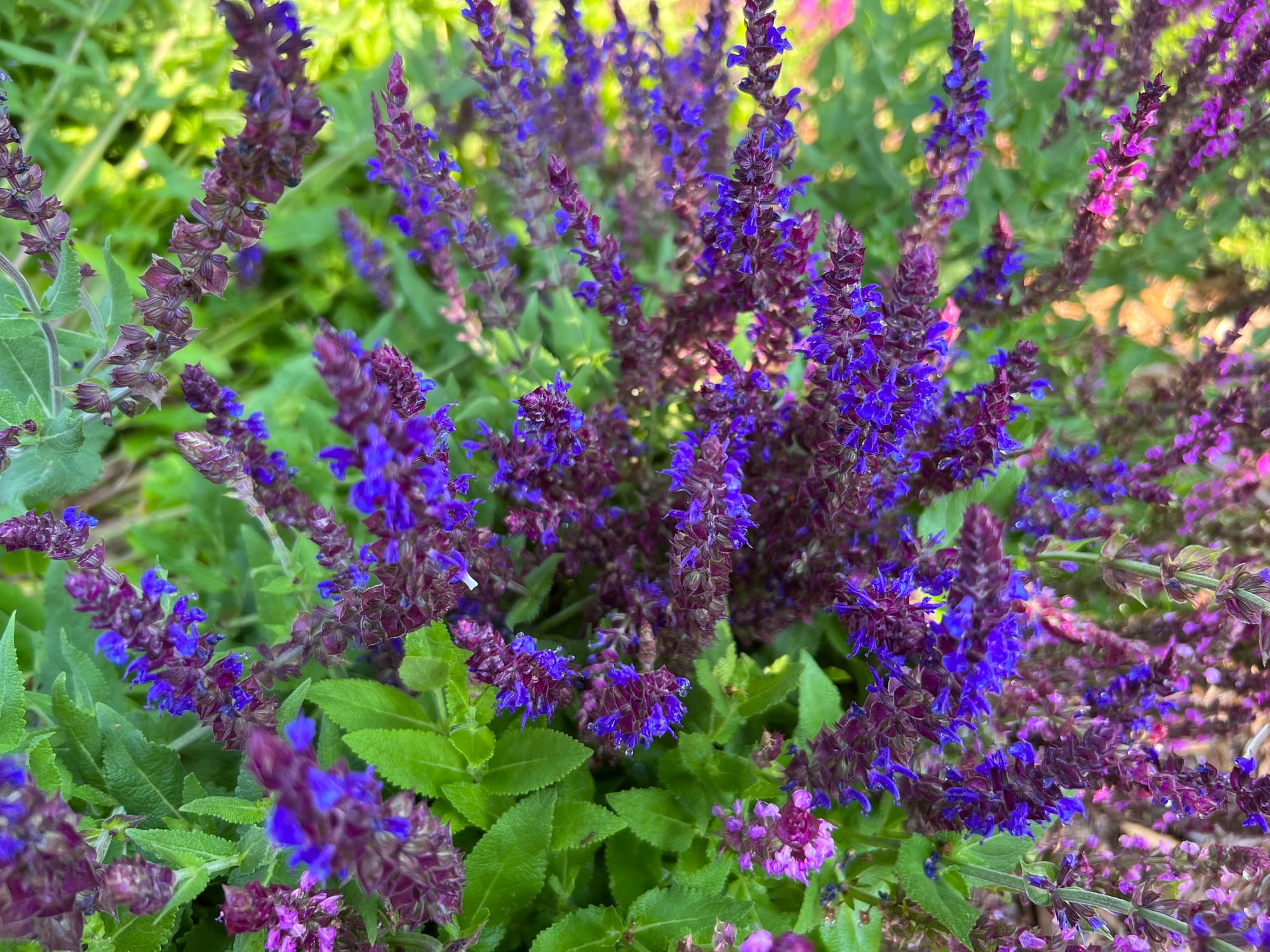
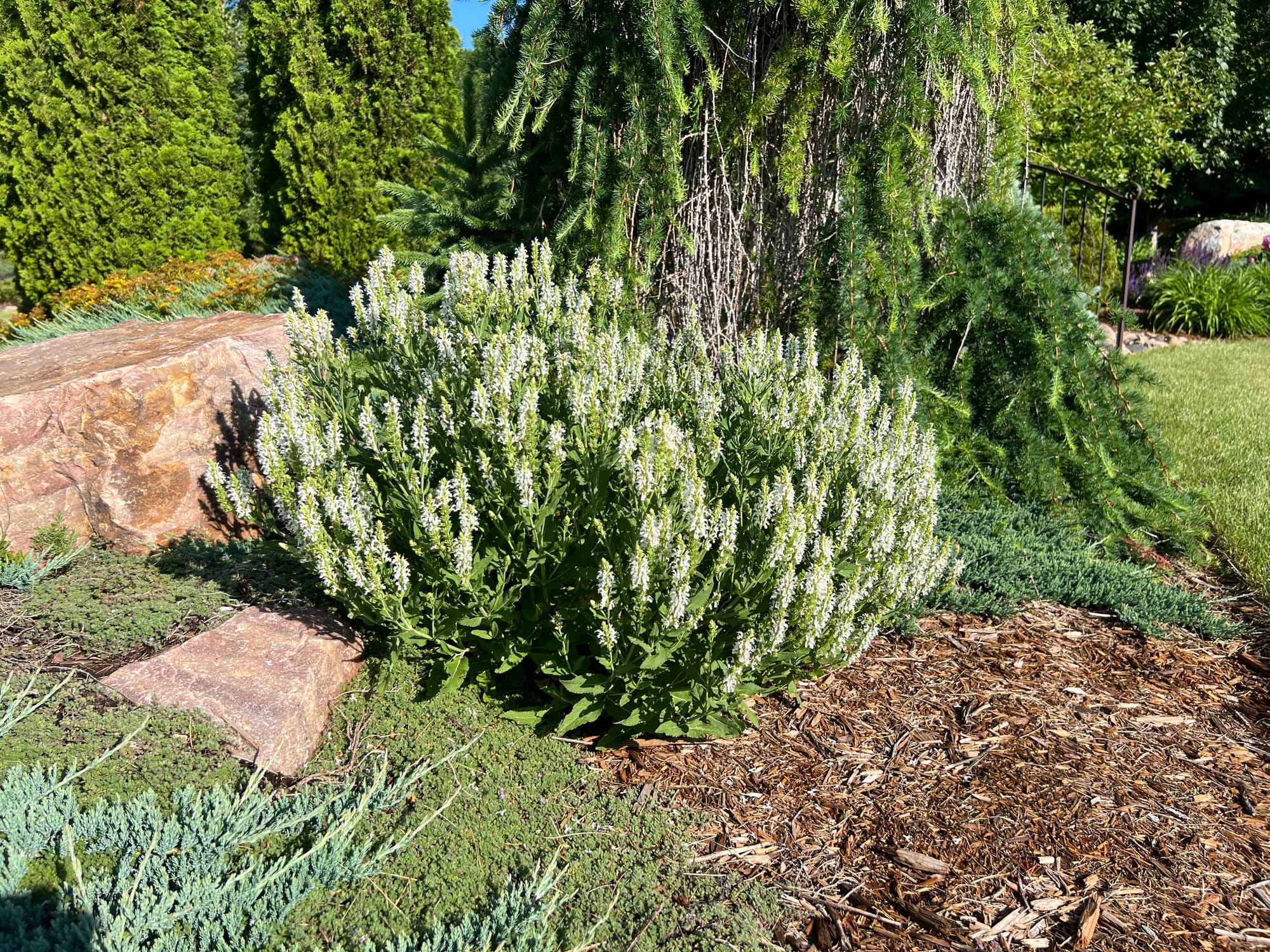
Blue and White Salvia
Monarda, or Bee Balm, is another common plant used in pollinator gardens. There are numerous cultivars available in the trade with various flower colors. It is a spreader, though, with an aggressive rhizome, but it is a balm to the bees, so it is worth growing.
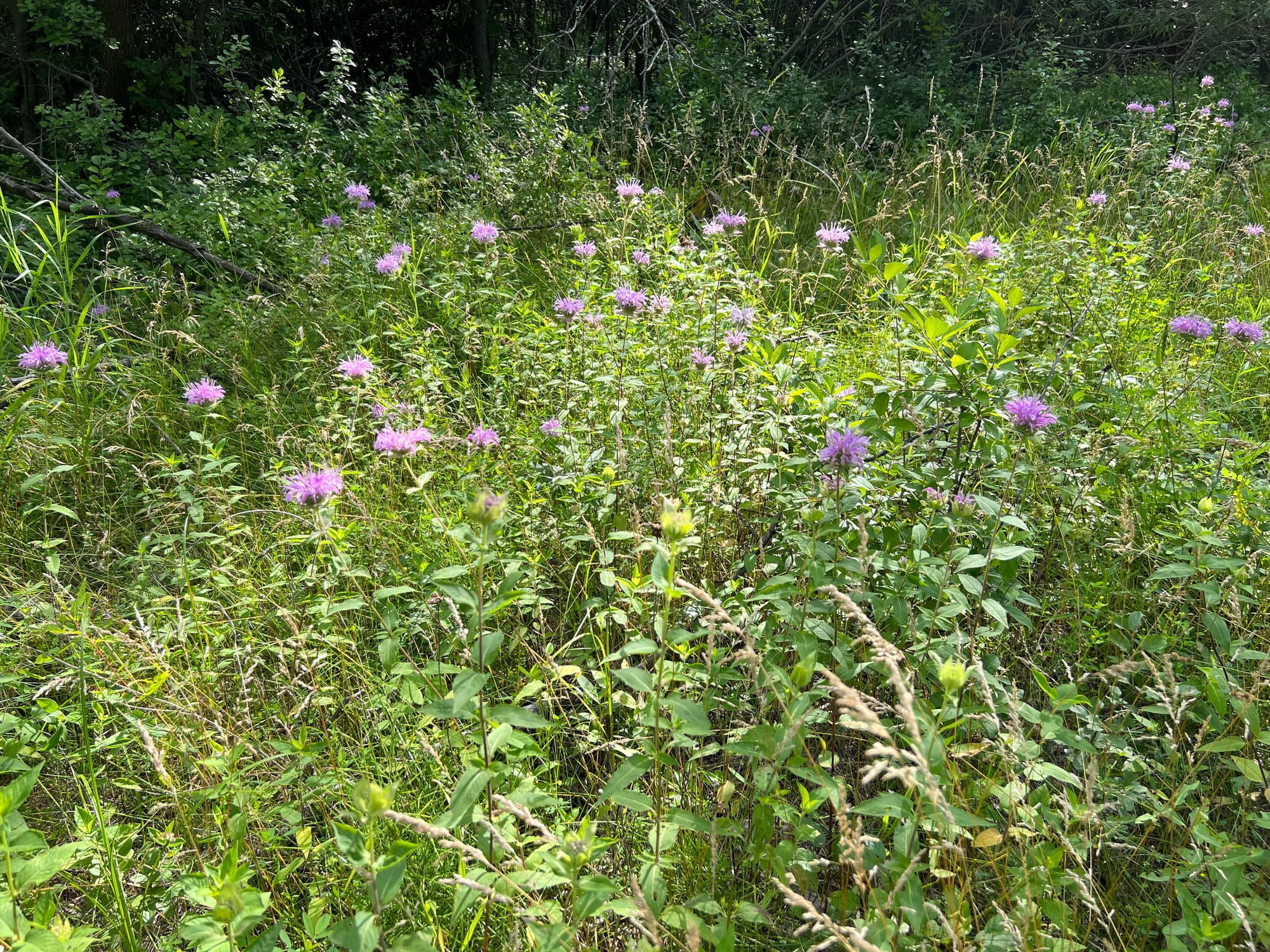
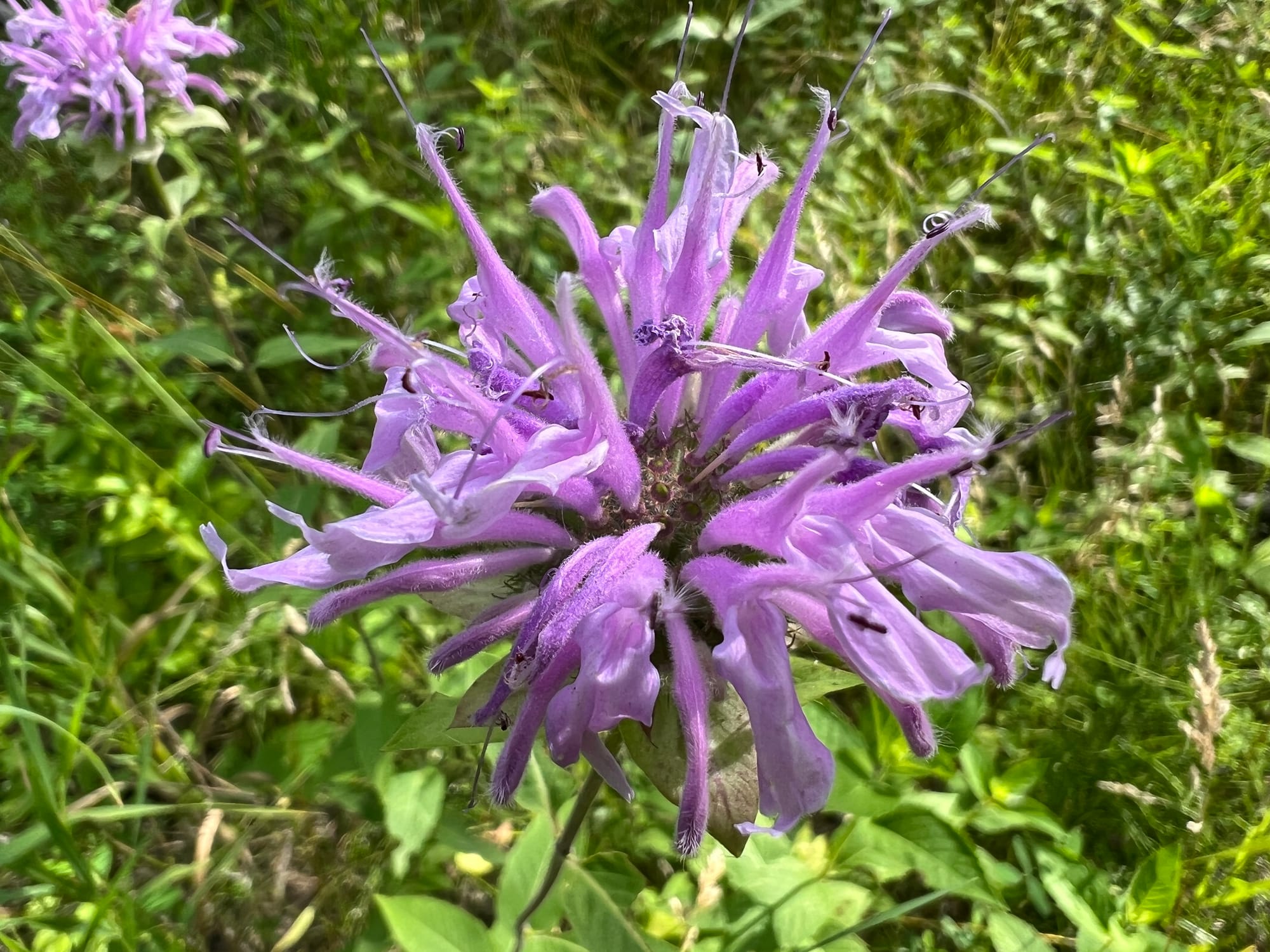
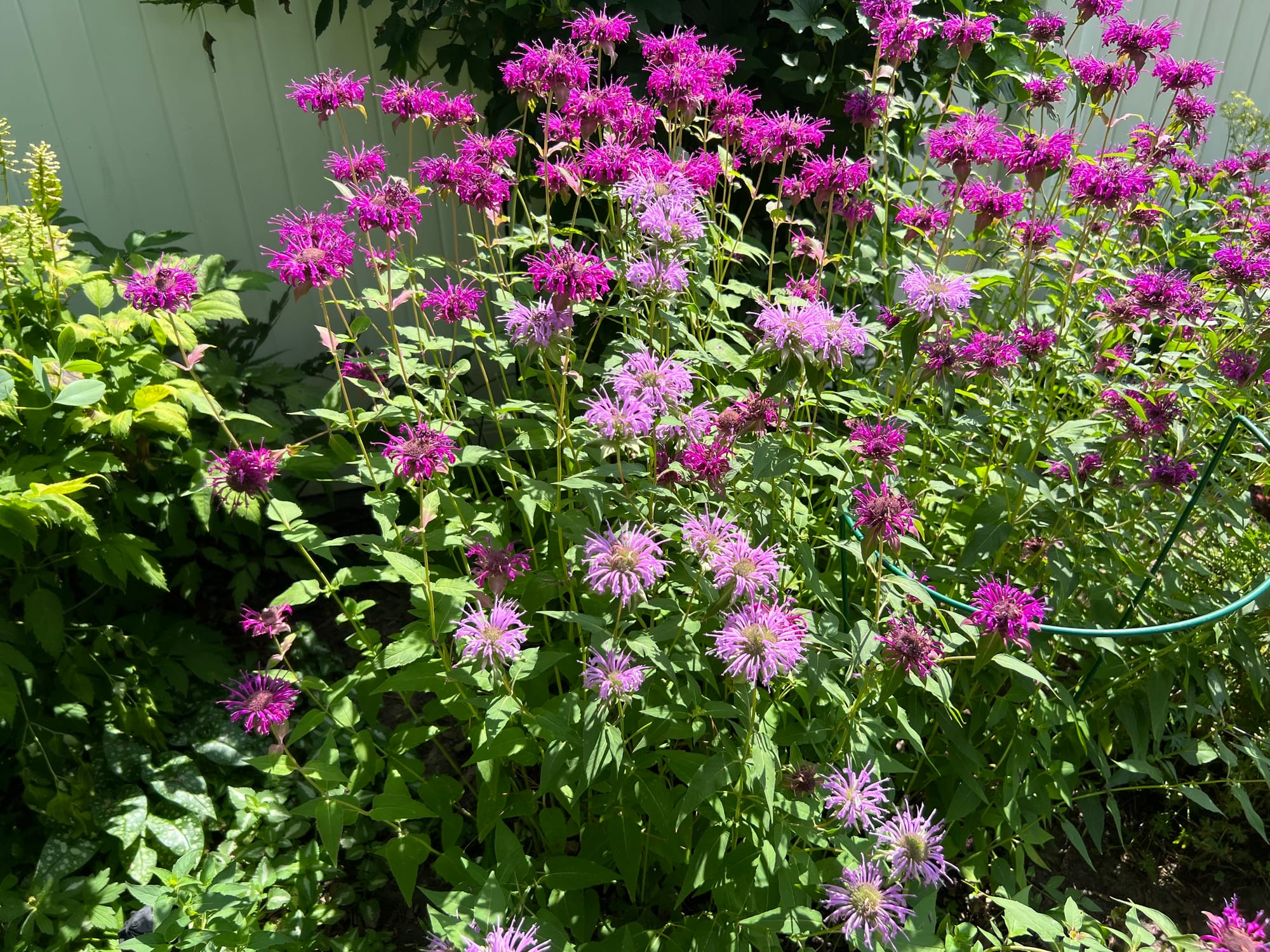
Monarda or Bee Balm
It’s fun to watch the Bumble Bees work their way in and out of this tubular flower on this Dakota Burgundy Beardtongue. The plant is loaded with light-pink flowers that open from late June through early July, complemented by deep burgundy leaf color. Our main plant died last winter, but many surrounding smaller plants are coming back from seed. Gardens are always changing.
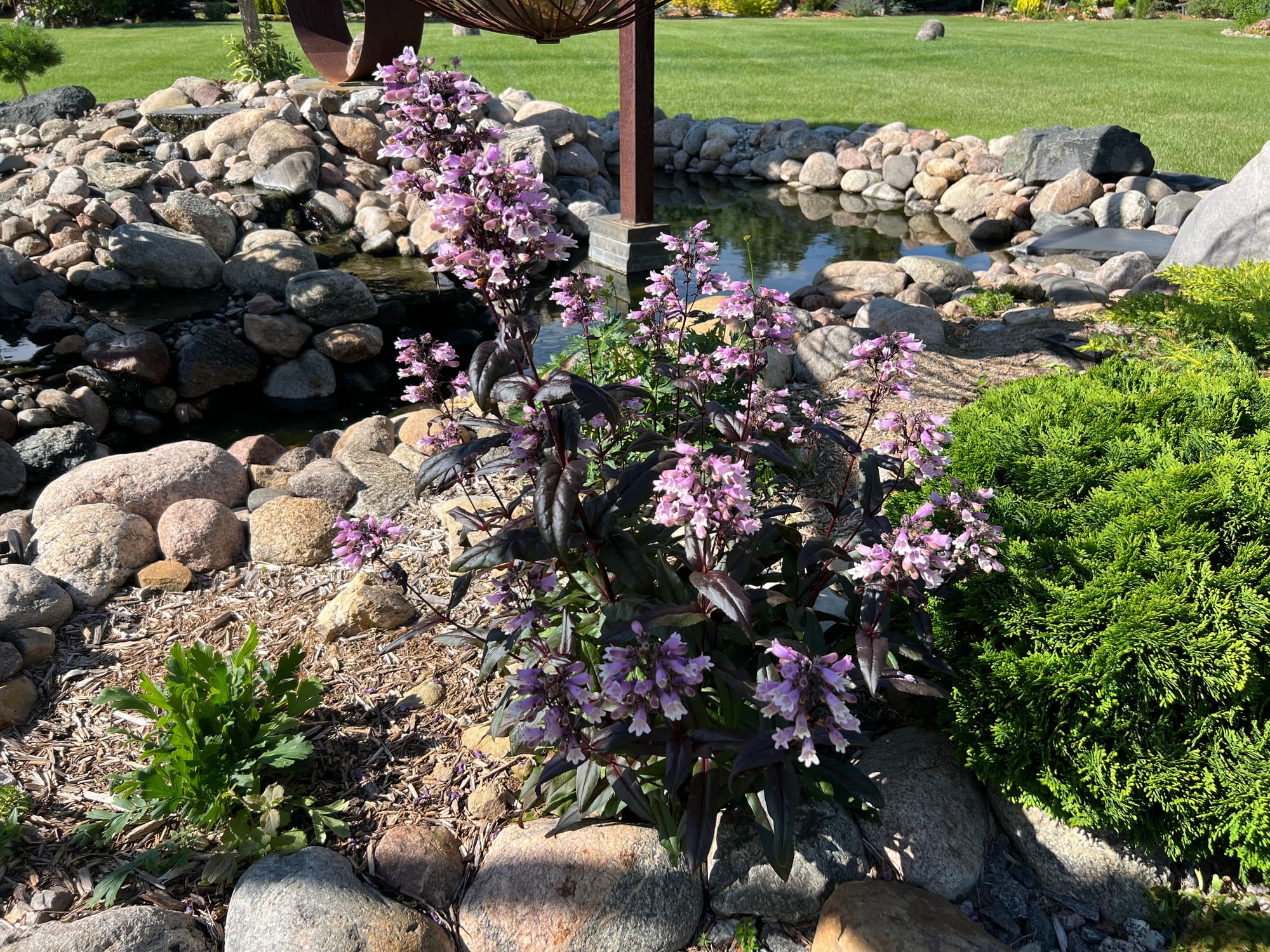
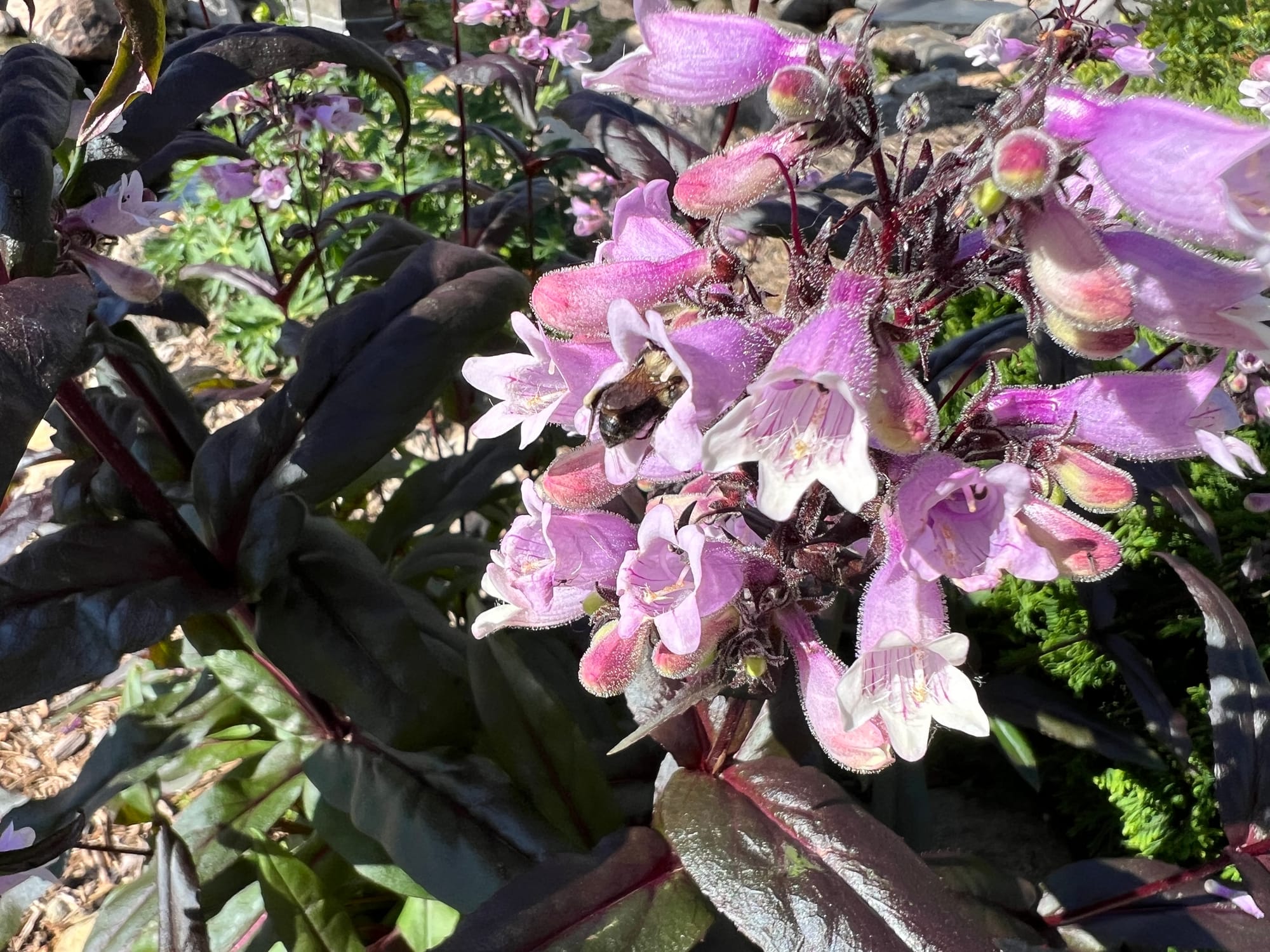
You’ll notice our beardtongue (now several, new little beardtongues) is located next to our water feature. Here again, I installed this in our landscape, thinking we would enjoy it mostly for the sound of water trickling. But it has become more enjoyable to watch the birds, bees, butterflies, dragonflies, and more frequently in this area, from spring through fall.
By accident, again, I created several areas where the water is shallow and deep, moving, and not moving. And all the “critters” gravitate towards their preferred level for drinking water. So I’ve learned it’s not just essential to provide water in your pollinator garden, but also to have many different depths and shore-like or saturated areas. Here’s a video that looks at many of the other plant varieties growing in this water feature area.
A final thought on plants in pollinator gardens is that a plant's natural “draw” for insects can be lost or reduced in breeding programs. Of course, mostly by accident, I’m sure. So keep that in mind as you research and add plants to your gardens. Some newer varieties may not be as up to the task as the natives.
For more information on planning and additional varieties you may want to consider for your pollinator garden, I’ll refer you to this informative publication from North Dakota State University.
NDSU Extension Publication Bee-utiful Landscapes | Building A Pollinator Garden https://www.ndsu.edu/agriculture/sites/default/files/2025-01/h1811.pdf
That’s all for now, thanks for stopping by Garden Hike!
Kevin
Make sure you check out A.M. Leonard for all your horticulture tools and supplies. They're my go-to supplier! They've been in business since 1885 and have excellent quality and selection.
Check Price - Enter Discount Code GARDENHIKE10 To Receive $10 Off Orders $75 Or More

When you purchase through links on this site, we may earn a small commission at no additional charge to you.